
Animal Products and Health
Jump Links
Early U.S.D.A. Dietary Guidelines
Protein Sources and Hazard Ratios
Why Limit Saturated Fat?
Understanding Inflammation
Read Before You Go “Carnivore”
Animal Products and Insulin Resistance
Animal Sources of Protein: More Branched Chain Amino Acids and Methionine
Vascular Disease and Safety Talk
Atherosclerosis, TMAO and Red Meat
Body Fat and Cancer Risk
Your Cholesterol: Good, Bad, and Ugly

This “Healthy Eating Plate” from Harvard’s T.H. Chan School of Public Health is in effect the Mediterranean diet. Harvard strongly promotes this diet-style as healthy and protective.
AT RIGHT — Where’s the meat? This “Vegan Plate” graphic was developed by author, Brenda Davis, RDN, a tireless promotor of the vegan or vegetarian dietary patterns. Today, there is no longer controversy about vegetarianism. Careful, informed eating with low (or no) animal products are associated with lean bodies, lower disease risk, and many save money. Vegan Plate graphic also shows necessary supplements for those choosing to avoid meat. Vitamin B12 is a critical vitamin produced by bacteria. Our primary source is bacterial contamination on or within meat. Vitamin D is generally deficient in northern latitude people and should be supplemented. Iodized salt is a simple, inexpensive source for iodine.

Without fish or intentional supplementation, the vegan diet-style is also insufficient in omega-3 polyunsaturated fats (described under Fats, Oils and Health). The common reasons people choose to go meat-less include: health, weight-loss, and animal rights/cruelty. Today, global health has grown in importance because a diet based on industrial animal-agriculture products has much higher climate-change impacts. Beef and dairy production are especially high in impact. Cows fed on grain produce surprising levels of methane, the “greenhouse gas” about 28-times more potent than carbon-dioxide. Globally, as a source of greenhouse gasses, animal-agriculture rivals the transportation sector.
Early Dietary Guidelines
The food labelling and regulation that began in the late 1970’s was supposed to improve consumer health and knowledge. Unintentionally, the exact opposite occurred and we compounded some nutritional myths that had been with us since the late 1800’s.
The U.S.D.A. guidance we receive today is better than in the past, but still suffers from political influence. Firstly, proof is extremely uncommon in the biological sciences. Those who study human disease-causation refer to correlation, relative risk, and probability—not proof. In the absence of proof and with the tremendous pressure by special interest groups, who lobby for leeway in regulation, there has always been tremendous pressure to water-down guidelines and food-safety standards.
Some of these powerful groups include agri-business, food processors, and trade associations. Yet, there is still good science! Because America’s legal system has generally considered the marketing language used my the food industry as protected (free) speech, consumers have to be very careful. Read the labels!
Debunking a Protein Myth
There is no question that meat, fish, dairy, and animal products generally contain lots of protein. Among the most persistent myths about nutrition is that the protein in animal products is “complete,” while the protein found in plants is “incomplete” (and insufficient). For the record, that is not true. If we complement our plant-sources of protein, we acquire the nine essential amino acids in an adequate balance to support healthy protein synthesis. This incompleteness myth, perhaps a century old, has caused us to over-consume animal products and under-consume plant foods.
Dad’s college nutrition textbook, Rose’s Foundations of Nutrition (1944 ed), proudly signed “Dean P. Sheldon, P.E. Major,” describes plant protein as “incomplete” and makes no mention of dietary fiber. Nada.


Vegan Bodybuilder, Robert Cheeke
A careful vegan diet-style can provide all the essential amino acids needed for protein synthesis.
Health-science debunked the only-animal-protein-is-complete myth about five decades ago. It seems that none of the early “experts” pondered how a mountain gorilla, a species genetically close to humans, could become so large and awesomely powerful eating shoots, leaves, and bugs.
To make the point, let’s consider rice — which is relatively low in amino acids compared (by dry weight) to a porterhouse steak or kale, but all nine “essential” amino acids are there in every kernel of rice. Plants, like legumes, nuts, seeds and dark greens have much more protein than rice, our example. People who choose a diet with no animal products (vegan), or someone who is lacto-ovo vegetarian (does eat eggs and dairy), can get all the protein — containing all nine of the “essential” amino acids (those found only in food) — their bodies require. A relevant factoid from author Brenda Davis, RDN: about half of the protein intake for Earth’s 8-billion human inhabitants comes from grain—absolutely complete protein[i]
Yet, variety is the spice of life and food diversity is healthful. Be they from plants or animals, we complement all the essential amino acids by eating a diversity of whole foods.
Early U.S.D.A. Dietary Guidelines — the Cart Before the Horse
Dietary recommendations from the U.S.D.A. began in the early 20th century and were always very pro-meat, pro-dairy–foods that were produced by just about every farmer. That effort continued in the 1940s through 1960s — even as U.S. heart disease rates were trending upward. But so were our per-capita consumption of sugar and refined flour. In those years, our government-funded media continued to encourage ample daily intake of animal products with their cholesterol, and saturated fat. Truth be told, animal fat is far from being entirely saturated (described in Fats, Oils and Health).
After a lengthy congressional battle during the 1970’s, the U.S.D.A. released new recommendations in 1980: A fancy new food pyramid and dietary guidelines. However, some central facts about human metabolism, still remained hidden. For example, science had yet to discover how the body metabolized fructose (fruit sugar) — by weight about half of your honey and the “added sugar” found on every label.
Our understanding that fructose is only metabolized by the liver wasn’t revealed until 1985 — years after the new guidelines went into effect and food processors had already boosted sugar consumption. In 1980, we still believed the trans-fats (high in partially-hydrogenated vegetable oil) — used in margarine and fryer grease — were healthier than saturated fat. Dutch scientists discovered they were deadly in 1990, a conclusion was subsequently reinforced by Harvard University’s enormous Nurses Health Study and the Health Professionals Follow-Up Study.
Early U.S.D.A. Guidelines — “the Diet-Heart Hypothesis”
Getting America’s growing rate of heart disease under control was a huge deal. Beginning in the 1950’s, the prevailing health-science hypothesis was that our steadily growing rate of heart disease could be slowed by reducing America’s intake of saturated fat—the most common type fat in eggs, dairy, and meats. The “bad” LDL cholesterol increases with higher intake of saturated fat and this, we assumed, was causing the heart disease.
In 1960, this “diet-heart hypothesis” was strongly endorsed by the American Heart Association, but that was only part of the heart disease story—one that will claim just under 700,000 U.S. lives this year. A vocal group of heath science experts continue to question the relative risk of consuming saturated fat — still an active controversy after all these years.
Concerning the intake of our three macro-nutrients — fat, protein, and carbohydrate — on this website I reference the current dietary recommendations of the U.S.D.A., the U.S. Centers for Disease Control, the World Health Organization, Harvard’s T.H. Chan School of Public Health, and the American College of Lifestyle Medicine. All continue to recommend keeping the intake of saturated fat low.
Long story short, by the end of the 1970s in responds to new regulations by the United Stated Department of Agriculture (U.S.D.A.), food processors were reducing their use of saturated fat. It was a change that created a colossal — “healthy” — marketing opportunity. The processed food industry redesigned product formulas, made them more addictive, and they began advertising like all get-out and “low fat” went straight to the bank.
In the decades that followed, on net Americans did lower saturated fat intake, but ended up eating more total calories: higher levels of omega-6 polyunsaturated fat; more refined carbohydrates (white flour), and more sugar. At the same time, we removed even more of the much needed omega-3 polyunsaturated fats and — importantly — the whole-plant fiber.
Protein Sources and “Hazard Ratios”
This page discusses dairy foods in several sections, here and then further down in a discussion of several amino acids that are especially abundant in animal-sources of protein. American’s have long been taught that milk and dairy are unequivocally healthy; in essence, that more is better. Another myth that needs to be unravelled! Dairy foods can be healthful and beneficial, but “more” may actually mean less healthful, depending on the starting point.
Dairy intake in Italy was studied. The 45,000 participants were surveyed over a 19-year period. Researchers discovered the beneficial correlation of drinking less than one-cup of milk daily—2oz to 5oz (50g – 160g/day)[i]. A similar result is seen in Japan where overall dairy intake is far lower than in the U.S.[ii].

Both studies computed a “hazard ratio” for all-cause mortality. Those who drank a relatively small amount of milk regularly, lived longer than those who drank none. The U.S.D.A. recommendation is to consume much more milk than was shown to be healthy in either study. ABOVE-RIGHT — an image showing the diversity of foods with ample protein.
GRAPH BELOW — we consider a 2021 analysis by two leading nutritional experts from Harvard University. In their white paper titled Milk and Health, they compared dairy and other common protein-rich foods — in view of their potential risk-ratio (hazard ratio) for all-cause mortality. The data-base for the analysis was 131,342 U.S. men and women surveyed over a 32-year period who were part of the Nurses Health Study and the Health Professional Follow-Up Study.[iii]
In the graph below, dairy is the black line. Graph Far Left — the all-cause mortality-risk from sourcing protein from plants, poultry and fish is shown to be lower than is dairy (the black line). Graft Far Right — red meat and eggs have an all-cause mortality-risk higher than dairy. The Worst — processed meat, at the far-right of the graph, shows the highest “hazard ratio” by far.
Higher relative health risks from the frequent consuming of processed meat, have been repeatedly discovered in numerous studies. A 2023 analysis of global research, involving 70 separate observational studies and over six-million study participants, found that the daily intake of 50-grams of processed meat increased the hazard-ratio for diabetes and cardiovascular disease by 26-percent. The daily intake of 100-grams of (unprocessed) red meat increased the hazard-ratio by 11-percent (cited below).
Red meat consumption, cardiovascular diseases, and diabetes: a systematic review and meta-analysis. Wenming Shi, Xin Huang, C. Mary Schooling, and Jie V. Zhao. European Heart Journal (2023) 44, European Society of Cardiology
I derived the graph (right) from a similar presentation in Milk and Health (2021). Lead author, Walter C. Willett, Ph.D., is the long-time professor at Harvard’s School of Public Health, Dept. of Nutrition and Epidemiology. Willett’s earlier work helped clarify the benefits of the traditional Mediterranean Diet. The same diet-style is shown at the top of this web-page as the “Healthy Eating Plate.” In the study’s conclusion, the authors recommend limiting the consumption of cow’s milk to zero to two-cups daily (or the equivalent of other dairy foods). Key take-home message: more is not better.
The researchers concluded that, if you already have good overall nutritional access, there may be no benefit in consuming any dairy foods. Less than one-cup daily—beneficial; zero to two—probably OK. Dr. Willett’s recommendation offers flexibility, a clear caveat, and is very different from the current U.S.D.A. recommendation of “three-cups daily.”

Then, Dr. Willett shatters two sacred cows of the dairy industry–Calcium and Vitamin D:
“For calcium, alternative dietary sources include kale, broccoli, tofu, nuts, beans, and fortified orange juice; for vitamin D, supplements can provide adequate intake at far lower cost than fortified milk.”[i]
On the far-left side of the above graph you find the most beneficial, lowest-risk-approach to sourcing protein—plants! Nuts, seeds, legumes, tofu, dark greens, yada, yada.
With or without some animal products, obtaining more protein and fats from whole-plant sources yields the greatest health, longevity, and disease fighting. Compared to years ago, agencies and health-science institutions—like the Harvard School of Public Health, Cleveland Clinic, UCLA, the C.D.C., the National Institutes of Health, and so forth—are recommending much lower, more selective levels of animal product consumption. Naturally, that means less animal protein and more from plant sources.
[i] Ibid–Milk and Health. Walter C. Willet, Ph.D, David S. Ludwig, M.D

Why Limit Saturated Fat?
A diet high in animal products is going to be comparatively high in protein, saturated fat, and cholesterol. While saturated fat remains controversial, my comments relating to saturated fat, here and below under Understanding Inflammation, are consistent with major U.S. and European academic, governmental, and lifestyle medicine sources.
I highlight this last group because lifestyle medicine practitioners are: a) on the cutting-edge of applied nutritional science and b) are today’s heretics of mainstream medicine. That is, they are the medical doctors trying not to prescribe pills and are laser-focused on helping patients achieve permanent lifestyle modification (and they actually reverse chronic disease). There are exceptions, of course, but many lifestyle medicine clinicians remain advocates for low saturated fat intake.
The body produces its own saturated fat beautifully and plant foods also contain low levels — not just meat, eggs, dairy, etc. For example, olive oil is about 14-percent saturated fat. The fat in an avocado is about 15-percent saturated and the fat on a beef is about half-saturated. Avoiding or limiting the high, habitual consumption of saturated fat is considered healthy. Understanding of why recommendations for optimal health require its limitation requires our considering the relationship between disease and inflammatory response.
Understanding Inflammation
Inflammation means our immune response is triggered and is present with both trauma and disease. When inflammation never stops, the rough-and-tumble inflammatory response itself can elevate disease risk and causes damage. It can be like a S.W.A.T. team where sometime good people get hurt — we actually produce free-radicals during the immune response and these can do indiscriminate damage to our cells. Of course, the immune system is also protecting you every second from being eaten by hungry microbes that are everywhere in the environment. A non-stop inflammatory response is extremely unhealthy and elevates disease risk. And that is more common than you might think. A person who is obese or is experiencing insulin resistance will tend to have higher markers for internal (metabolic) inflammation.
Internal inflammation can be caused by diet, including high level of saturated fat intake. Walter Willett, Ph.D, M.D. of the Harvard T.H. Chan School of Public Health considers saturated fat, to be the most inflammatory form of dietary fat. The omega-6 polyunsaturated fats (vegetable oil) are also inflammatory, but for very different reasons — described in Fats, Oils, and Health.
Four types of food in the Standard American Diet (SAD) stand out as being especially inflammatory when routine and consumed on a daily basis:
Refined carbohydrates–meaning sugar and refined white flour (mostly)
Saturated fat (mostly from animal products)
Poly-unsaturated oils high in omega-6 fat (cheap vegetable oil).
Ultra-formulated/Highly-processed foods
Good News! The fiber and antioxidants in a salad, a fresh apple, or a vegetable-rich stew tend to LOWER internal inflammation, over time. There are strong health-related arguments for restricting the four categories listed above from your diet, assuming optimal health is what you seek. Michael Greger, M.D., founder of the American College of Lifestyle Medicine suggests a “Protein Swap.” Swap-out some animal protein for plant-sources (beans, split-peas, nuts and seeds). Doing so will instantly lower saturated fat intake and boost fiber and anti-oxidant intake. Plant-sources of protein are linked to longevity and health.
Families who favor the SAD — the highly-refined, pre-packaged heat-and-eat, boxy cereals, pop, alcohol — AND high saturated fat — but skip the whole plant nutrition, have a high risk for an inflammatory fat imbalance, spikier inflammation, aggressive clotting and internal (metabolic) inflammation. These conditions leads to higher disease-risk, higher medical expenses, and more pain. More on these topics are under Fats, Oils, and Health.
Immoderately consuming animal products daily (but especially processed meats) — in combination with starchy and refined carbs, sugar, and ultra-formulated mixtures –– leads to what Joel Fuhram, M.D. has described as “a witches cauldron of cancer causation.”
With its uncontested links to chronic disease, SAD-style eating switches to the “ON” position the body’s inflammatory response. For a person with excessive weight or a food-related chronic disease, the “switch” for the addiction neurotransmitter (dopamine) may also be jammed in the “ON” position.

Metabolic Inflammation and COVID’s “Pre-existing Conditions”
Recall those who were hospitalized with a “pre-existing condition” during COVID-19? Their immune response was already working overtime, battling some metabolic problem probably linked to the SAD, excess calories, and worry—then they contracted the SARS COV-2 virus. The immune response itself was part of why many didn’t make it.
Health-science uses several names for the body’s internal inflammation: chronic systemic inflammation, or metabolic inflammation (meta-inflammation). This type of inflammation doesn’t quit until you stop the damage. Living life chronically inflamed is life-shortening! A doctor measures the body’s internal inflammatory condition with easy blood tests including Creatine Reactive Protein and Erythrocyte Sedimentation Rate.
More Good News! By lowering internal inflammation, the body becomes stronger as fighting disease, you get healthier, and may lose weight. This single sentence covers a ton and begs the question. How do you lower internal inflammation? What’s the magic pill?
We LOWER metabolic-inflammation by:
- Increasing the intake of fibrous, nutrient-dense, antioxidant-rich whole plant foods
- Shifting protein to include plant sources (those without the baggage of saturated fat and cholesterol)
- Reducing chronic stressors and improving our social connections (hopefully around a plate of healthy food).
- Getting regular exercise that moves the body and works the muscles.
- Getting 7 – 9 hours of sleep nightly
We INCREASE metabolic-inflammation with Stress and the Standard American Diet:
- Everyday refined carbohydrates, (sugar, muffins, pizza, white bread, deli-delights),
- High levels of saturated fat, animal protein, and cholesterol
- Excessive intake of omega-6 vegetable oil
- Low intake of whole plant foods
- Excessive calories
- Chronic stress
Metabolic inflammation elevates risk-factors for ALL common chronic diseases: heart disease, stroke, diabetes, obesity, kidney disease, auto-immune disorders, etc.
Moderate/Lower Animal Product Intake Lowers Disease Risk-Factors
We reduce relative risk of chronic disease by keeping inflammatory triggers low, which may mean the lower intake of animal products and animal-sourced protein. The current U.S. saturated fat intake (12-percent of calories) is about 100% higher than the recommendation of both the U.S. and World Health Organization.
Health improves as we become selective and choosy in our consumption of meats, eggs, and dairy. As we choose and learn to prefer whole plant foods (and plant-sources of protein) for our daily calories, disease risk — and waist line — tend to fall. Easy to say, but hard to do in our addictive, SAD society.
Inflammatory and Hazardous Terrain: Main Street U.S.A.
A random grocery store, deli case, or restaurant can be hazardous terrain — depending on what you buy and your current health-status. It can also be inflammatory terrain. I routinely recommend first walking deliberately to the produce section, or to where they sell plain nuts, and grabbing something whole and Real. Colorful vegetables, piece of fruit, or a salad bar, won’t spike blood sugar like a bag of cookies, those big muffins, or the croissant.
An avocado is an exceptional fruit — 75-percent of its calories from fat, but only a fraction of that is saturated; plus, the extra benefits of whole fiber, vitamins, minerals, and gobs of antioxidants. Same for the whole nuts and seeds, with calories are rich in satisfying protein, fiber, antioxidants, and healthy monounsaturated fats. Whether it’s rainbows or nuts and seeds, they are ANTI-inflammatory. Looking for something hot? Keep it simple and try the soup. Avoid the processed meat and white-flour delights devoid of nutrition.
Sadly, for many, an excursion into this hazardous and inflammatory terrain means an expensive bag or cart-full of inflammatory, ultra-formulated bullshit and metabolic danger. The ultra-processed “food” — engineered to be super-yummy and addictive — is dangerous when consumed habitually.
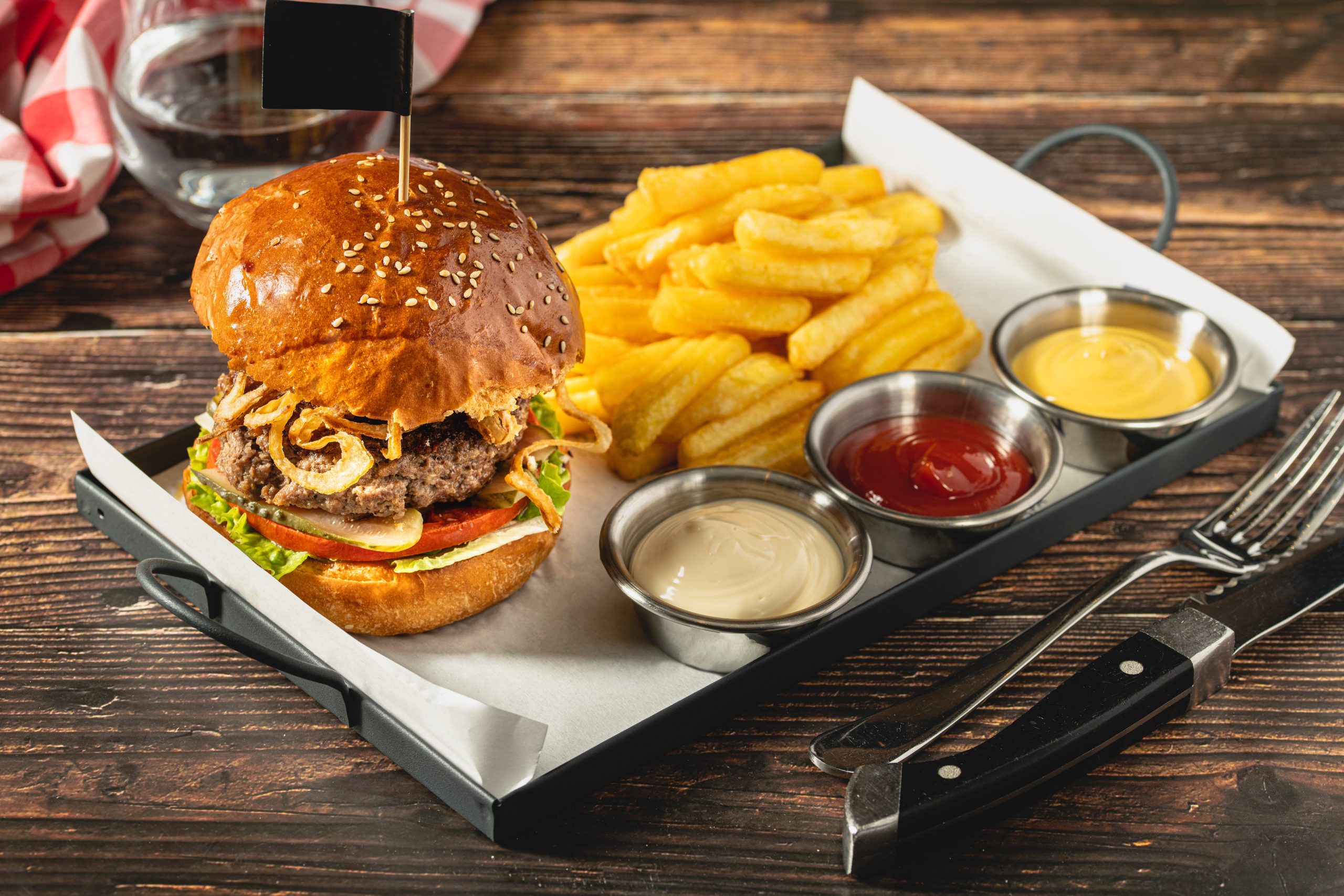
An American Classic!
The burger and fries with ultra-processed fixins’ is iconic for American food and our chronic disease pandemic: a white-flour bun to spike blood sugar, deep-frying high in omega-6 PUFAs, grain-finished beef high in saturated fat/cholesterol, condiments formulated with sugar, emulsifiers, colorants, and palatability enhancers.
Read Before You Go “Carnivore”
Guess which skull is from an obligatory carnivore? Our long, long, ago ancestors would never pass on good meat, be it fish, a gazelle, or a swarm of cicadas! But our closest living cousins, bonobos, chimps, and gorillas—in fact—don’t eat flesh as a daily habit. They certainly target enjoy insects and chimps hunt other monkeys and cannibalism does occur, as it has with humans, but that’s not day-to-day.
Look in the mirror and smile. Humanity possesses the jaws, teeth, hands, and metabolic machinery to eat fibrous plants very well, thank you.

Unlike most other mammals, humans and our primate cousins have color vision that enables very subtle food discrimination, like determining the ripeness of fruit on a high limb. We forage (shop) for plants to acquire our vitamin-C. Dogs and cats — true obligatory carnivores — make their own vitamin C in abundance.
Among the reasons Homo sapiens are so successful is that our physiology and our amazing intellect allow us many options. We take what we can get and make it work, at least for a while. Below, I’ve outlined two contrasting examples from our food history to clarify the point:
Traditional Greenland Inuit and Alaska’s Inupiaq (northern Eskimo) — seasonally ate a diet very low in plants and fiber; high levels of marine-derived protein and fat (very high in anti-inflammatory omega-3 polyunsaturated fat). To our knowledge, heart disease was rare. The lives of northern Inuit people were extremely rigorous!
Traditional cultures in Okinawa, Papua New Guinea and China — Theses cultures clearly thrived on the exact opposite diet. They ate whole-plant starchy foods ranging up to 85-percent of calories, along with various other vegetables and small amounts of animal fat and protein. The Okinawan traditional staple was sweet-potatoes, which are “high-carb” but also rich in vitamins, minerals, fiber and antioxidants — amongst the longest-lived cultures, bar-none.
The bottom example may be closer to being optimal[I] and it makes sense to consider “optimal” within the context of longevity. Today, we can make optimal a deliberate outcome. Fad diets thrive in food-confusion. “Carnivore,” or some other scheme to deliberately acquire a high percentage of total calories from animal products month after month, or to drink multiple tall glasses of cow’s milk daily through the life-span (see below), are not optimal for most people. When they are combined with the SAD pattern they are especially unhealthy and disease-promoting.
When the Body Becomes Acidic: Metabolic Acidosis
Diets chronically high in animal-derived protein can shift body chemistry towards excess hydrogen — meaning acidity. Your kidneys, bones, and urinary system pay the bill. We measure the body’s ability to buffer acid with the serum-bicarbonate test, part of a routine blood panel. Your serum bicarbonate is synonymous with carbon-dioxide dissolved in your blood. The number shouldn’t dip below 22mmol/L.
The body’s acid-balance is the job of your kidneys. To do so, the kidneys re-generate bicarbonate (from dissolved carbon dioxide) and we pee-out acidic ions. “Metabolic acidosis” (high acid) means the body is achieving this “balancing” by mobilizing its body’s own mineral stores: potassium, sodium, carbonate, magnesium, phosphorus, calcium, and others. Bad news!
Metabolic acidosis is an emergency for the body. A bicarbonate number below “22” may mean the body is pulling essential mineral from bone and muscle–increasing frailty and muscle wasting. Another common side effect is higher insulin resistance.
The kidney produces more ammonia and the urine becomes more acidic–as we piss out excessive nitrogen (dissolved protein) and minerals. The change means a higher likelihood of kidney stones — formed from your very bones. The rate of kidney disfunction (or outright disease) among adults 65-up is now 38%.
Fortunately, we can easily avoid most kidney failure and the painful stones scenario. Diets rich in plants and low in animals tends to restore alkalinity, the opposite of acid. The human body is not designed for SAD (or “carnivore”).
[i] New Horizons: Dietary protein, aging, and the Okinawan ratio. D. G Le Couteur, S Solon-Biet, D. Wahl, et al. Age and Ageing, 2016, Vol. 45: 443-447
Animal Products and Insulin Resistance
Insulin is the Queen of your energy balance hormones. It manages fat-making and glucose, a very natural fuel for the body. Because of its importance, insulin is discussed here and on the page Insulin and Metabolic Disease.
The loss of insulin function is absolutely central to the U.S. chronic disease crisis. Health-science calls the condition insulin resistance. It means that your normal food energy (glucose) can’t get into cells. So, circulating blood-sugar stays elevated and the pancreas must make more insulin to get the job done. A person’s waistline might also be growing and blood sugar, serum triglycerides, and the A1c measurement may all be rising. Type-2 diabetes is now a possibility.
Normally, if we think about insulin at all, it might be about a metabolic health concern. The focus might be cutting the sugar and refined carbs — a great start.

Insulin resistance has also been associated with a diet high in animal products — meaning high in animal-sourced protein and saturated fat. That may come as a shock to someone trying to control blood-sugar, triglycerides, and the A1c number, and being successful by a) keeping the Hb-A1C number low by cutting out refined carbs and b) eating more animal products, which provide good satiety.
Indeed, refined and finely-milled carbs and sugar are quite central to the U.S. metabolic disease pandemic. Looking back a few generations, there was probably ZERO white flour in most of your ancestor’s diets before about 1870 and the invention of the machinery to mass-produce refined, white flour. Sugar consumption also is radically higher today. Between our early colonial times and the year 2000, North America increased its intake of refined sugar at least 35-fold[i].
ALL weight loss strategies restrict refined carbs, including: “carnivore,” “keto,” and “paleo”, and the American Diabetes Association “Diabetes Diet.” These strategies all favor selective animal product consumption and all will lower the crazy glucose spikes and serum insulin. Importantly, the protein and fat provide satiety — food satisfaction which is important on a calorie restricted diet. These approaches have two very basic functional limitations as a best-practice treatment for optimal health.
- Sourcing high levels of calories from animal protein and saturated fat (and cholesterol) may not be a health-optimal, longevity diet.
- Plant-sourced protein has a strong track-record for reversing severe insulin resistance (discussed below)
[i] Good Calories Bad Calories (2007), Gary Taubes. Alfred A. Knopf Pub.
As we consider the myths, choices, and science around animal-based eating, keep in mind where we, the U.S. populous, is today:
- 42-percent obese,
- 40-percent pre-diabetic or diabetic, and
- 38-percent of U.S. seniors are dealing with kidney problems
- Approaching 700,000 U.S. adults will die from heart disease in 2025
- About 155,000 amputations annually — solely due to type-2 diabetes complications
Disease Care, Inc. is focused on new construction, new tech, and new billable procedures — “specialized services” — which allow them to monetize the complex treatments and America’s very real sickness. My sincere hope is that America does not normalize this growing debility. The U.S. anticipates $47-trillions in chronic disease spending over the next 15 years. Below, I continue to consider — and question — diabetes and weight loss treatment practices that advise sourcing high levels of calories from animal products.

Insulin Resistance and Intramuscular Fat
To reverse metabolic disease and reclaim health, a great challenge is burning fat between and within skeletal muscle tissue. Comparing it to the “marbled” fat in that juicy porterhouse steak is not inappropriate, because those grain-finished cows would also have a metabolic problem. Fat embedded, say, within a diabetic person’s thigh muscle[I] is remote and far from the liver. The person would need to work these peripheral muscles to clear-out inter-cellular fat stores using targeted resistance exercise. At the same time, they would be fully engaged in intense dietary control. That’s tough sledding!
QUOTED AT RIGHT: Researchers conducting weight loss trials with postmenopausal women showed the failure of the meaty, high-protein/low-carb trials to improve muscle insulin sensitivity. The diet trial using higher-animal protein generated higher circulating insulin — not lower. The “Disease Reversal” link on the page Fats, Oils, and Health describes how low-fat/high-carbohydrate plant-based diets are used to reverse diabetes, obesity and other chronic diseases.
“…it reflects a failure to improve a major pathophysiological mechanism involved in the development of T2D [type 2 diabetes]…and indicates more insulin is required in the HP [higher protein diet] group to dispose of a given amount of glucose”[i].
[i] High-protein intake during weight loss therapy eliminates the weight loss-induced improvement in insulin action in obese postmenopausal women. Gordon I. Smith, Jun Yoshino, Shannon C. Kelly, et al. Center for Human Nutrition and Atkins Center of Excellence in Obesity Medicine, Washington University School of Medicine, St. Louis. In Cell Report, 2016
Animal-Sources of Protein: More Branched Chain Amino Acids and Methionine
At the beginning of this page on Animal Products and Health, I debunked a tragic—still pervasive—myth about plant protein being “incomplete,” but stated there are important differences plant and animal protein that may influence health outcomes. Compared to plant-based protein, animal protein has a much higher proportion of the amino acid methionine and the three branched-chain amino acids (BCAA). When excessive they seem to exacerbate disease.
Our three amino acids with branched chains, comprise about 35% of the nine essential amino acids (those derived only from food) in the human body. Because they are more abundant in animal protein, we increase our body-load of BCAA by consuming more animal products. A type-2 diabetes treatment diet is often higher in meat and, therefore, high in BCAA. This “treatment” strategy may not be optimal for lowering insulin resistance. Below, I quote from two research studies on metabolic health that support this statement.
“Elevated plasma levels of BCAA have consistently been linked to insulin resistance in type 2 diabetes….emerging evidence suggests that the accumulation of their downstream [BCAA] metabolites…could play a crucial role in exacerbating insulin resistance[i].
In studies on different species, including humans, when we lower animal protein intake, key indicators of metabolic health improve.
“Our results highlight a critical role for dietary quality at the level of amino acids in the maintenance of metabolic health and suggest that diets specifically reduced in BCAAs…may offer a translatable way to achieve many of the metabolic benefits of a PR (protein restricted) diet.”[ii]
These health-science researchers described “metabolic benefits” of restricting the BCAA—meaning lowering animal product intake. To be clear, poultry, fish, eggs, and dairy are part of the American Diabetes Association’s “Diabetes Diet.”
The current, U.S.D.A. recommendation for protein intake (regardless of source) has a wide range, between 10-percent and 35-percent of total daily calories, but SOURCE MATTER. Getting 35-percent of calories from animal protein is probably NOT optimal for health. Healthier is to mix it up with plant-sources of protein — the beans, lentils, and split-peas (legumes). Below are some weight-loss and diabetes treatment diets and their protein intake.
- For today’s weight-loss “Paleo Diet” program, daily calories are about 25-percent protein.
- The American Diabetes Association “Diabetes Diet” for people with type-2 diabetes, is about 20-percent protein[i].
Protein, along with fiber, are high-satiety (food satisfaction) macronutrients — critical for someone trying to shed pounds by lowering their caloric intake. Plant sources are a good way to go!
In a review of studies of diet and diabetes indicators, all of which included randomized control trials, higher plant protein consumption correlated with “significant modest improvement” in fasting insulin, fasting glucose, and hemoglobin-A1c. The review study concluded that plant protein improved serum-glucose in type 2 diabetics better than animal protein[ii]. The same outcome can be inferred for weight loss, because excessive body fat is frequently caused by the same problems: elevated serum insulin, elevated blood-sugar, and triglycerides (fat in the blood) interfering with insulin at the cellular level.
Regarding the epidemic of persistently excessive insulin (insulin resistance) here is a key concept the public is not being told and I hope readers will grasp. To do so, below I use cheeky all caps:
ALL the dietary macronutrients are involved in insulin resistance, NOT SOLELY REFINED CARBOHYDRATES AND SUGAR.
For the type-2 diabetic person, blood glucose, insulin and fat in the blood are definitely problems; meaning, insulin receptors jammed-up with fat and the damaged cells not handling food energy properly. This subject is covered in greater detail on the page Insulin and Metabolic Disease.
[i] The Effect of the Paleolithic Diet vs. Healthy Diets on Glucose and Insulin Homeostasis: A Systematic Review and Meta-Analysis of Randomized Controlled Trials. Malgorzata Jamka, Bartosz Kulczynski, Agata Jurac, et al. J Clinical Medicine 2020. Jan 21;9(2):296.
[ii] Effect of Replacing Animal Protein with Plant Protein on Glycemic Control in Diabetes: A Systematic Review and Meta-Analysis of Randomized Controlled Trials. E. Viguiliouk, S.E. Stewart, V. H. Jayalath, et al. Nutrients, December 2015.
[i] The role of branched-chain amino acids and their downstream metabolites in mediating insulin resistance. A.M. Abdualkader, Q. G. Karwi, G.D. Lopaschuk and R. A. Batran. Journal of Pharmacy and Pharmaceutical Sciences, 2024, Vol. 27.
[ii] Decreased Consumption of Branched-Chain Amino Acids Improves Metabolic Health. Luigi Fontana, Nicole E. Cummings, Sebastian I. Arriola Apelo, et al. Cell Reports, Jul 12; 2016(2):520-530.

About Those Troublemakers
About 500 amino acids have been identified in nature. Our body and brain use twenty-two, nine of which we must get with food. With these, we construct all our protein arranged in countless ways: muscle tissue, collagen, enzymes, cholesterol, hemoglobin, neurotransmitters, hormones and so forth.
The four “troublemakers,” as I call them, are unavoidable: methionine, isoleucine, leucine, and valine. The last three listed differ from the other 19, having a branched structure, hence the name branched-chain amino acids—BCAAs. The table on the right shows the percentage by which these four “troublemakers” are reduced when we lower animal-source of protein. We can reduce the BCAA, not avoid.
Adapted from: Defeating Diabetes (2003), authors Brenda Davis, RDN and Tom Barnard, MD.
Diets higher in animal protein are higher in “the troublemakers.” In the person with insulin resistance, less insulin secretion was shown to be necessary — if the protein was plant-based. In his summary, Dr. Abdualkader, a diabetes researcher with the Montreal Diabetes Research Center, writes:
Branched-chain amino acids “…appear to have unique effects in obesity-induced insulin resistance, and they are considered a major contributor to the pathology of type 2 diabetes and coronary artery disease.”[i]
The essential amino acid methionine is not “branched.” It’s the amino acid about twice as concentrated in animal protein compared to protein from plants (table above). Moreover, methionine is the dietary amino acid “most vulnerable” to free-radical damage. Mammalian studies show that increasing methionine intake correlates to a shorter life. Conversely, lab animal diets low in methionine extend animal lifespan “by as much as 44-percent.”[ii]
Plant-sourcing our protein allows a body to significantly lower dietary methionine. That’s great! Elevating plant-sourced protein will significantly reduce free-radical damage to DNA and the mitochondria, the power plants in all cells.
Methionine’s breakdown-products have been shown to activate the enzyme mTOR (mechanistic target of rapamycin)—described variously as “childhood’s engine of growth” and “a speeding car without brakes”[iii]—not what adult bodies need in excess.
[i] Ibid– The role of branched-chain amino acids…. A.M. Abdualkader, Q. G. Karwi, G.D. Lopaschuk and R. A. Batran, 2024
[iii] How Not to Age (2023). Michael Greger, M.D. Flatiron Books—Pg 101.

Dairy Foods and the BCAAs
Dairy intake is somewhat sacred in America, perhaps due to the U.S.D.A. I certainly drank lots as a kid and my English and German ancestors were undoubtedly big milk-drinkers. I discuss milk and health in several sections, here and under Protein Sources and Hazard Ratios, near the top of this page.
A cow’s milk has three-times (300%) more of the BCAA leucine than does human milk. Leucine is a potent activator of mTOR, the special enzyme absolutely critical for infant mammals. Extra leucine is great for super-fast growing rat-pups or the newborn calf that will achieve 400 pounds or more in five or six months. But not so optimal for humans.
Human infant growth is comparatively slow. Optimal human growth in both height and weight is manifest through a human mother’s milk, growth factors, enzymes, proportional fats, and protein. Plugging the toddlers, teens and post-reproductive adults into cow’s milk — our societal pattern of high levels of dairy intake — is especially problematic when we least expect it, decades later.
Researchers have now associated higher intake of dairy products with higher incidence of bone fractures and bone diseases, including heart disease and cancer, not less. At 6-foot 5-inches, and now in my mid-60’s, I can say with some personal experience (that began in my teens) that increasing upward growth velocity may not translate to “healthy.” More bone fractures from drinking milk? Isn’t that exactly what the U.S.D.A. believed more milk would prevent? Yes, it is.
Strong bones and teeth, right? It turns out, taller — folks (like me) who experienced high early growth velocity — break more hips and have more skeletal problems, not fewer. Again, the discussion about milk intake is also considered above, under Protein Sources and Hazard-Ratios.
In our teaching children and families and in our food regulation, low cost plant-sources of protein have gotten the short end of the stick. Key Concept: plant-sourcing more of your daily protein, avoids a bunch of unhealthy baggage. These include the excessive intake of branched chain amino-acids, mTOR, saturated fat, and cholesterol.
Vascular Disease and Safety Talk
A few years ago in early July, I was the Wednesday morning volunteer DJ at the Haines public radio station, KHNS-FM. The Safety Talk, a top-notch community safety program sponsored by the Haines Volunteer Fire/EMS Department, was supposed to begin in a few minutes.
Right on que, two savvy volunteers pile into the control room, rap-sheets in hand. With a minute to spare, Al and Lyle were settled in. I adjusted the microphone-levels and cued the theme music to The Good, Bad, and Ugly.
At 8:45am, Fireman Al and Lyle launch into a no-nonsense, scripted safety conversation. This particular program focused on how to respond when there is a medical emergency. Over the years, unquestionably, “Safety Talk” has saved lives in Klukwan, Haines and Skagway, Alaska and many millions of dollars in property damage.

On this day, a few minutes in to their rap, Lyle made an offhand remark dealing with possible causes of a heart attack — the oft-repeated analogy of diseased coronary arteries being kinda-like bacon grease that clogs up the kitchen drain. I wasn’t sure about that, but mostly I kept my mouth shut.
Wasn’t vascular sickness more complex? And didn’t you guys just raise money with a classic, July 4thBrisket Barbecue with all the fixins’? Well, after some very careful research, I can say that Lyle’s analogy is not wrong……however, acquiring vascular disease is complex; more so that just eating too many eggs or too much bacon and brisket.
Atherosclerosis is the scientific name for vascular disease and it does look a bit like chicken fat. Down the line, the blood vessel sickness with a hard-to-spell name, can mean hypertension, heart disease, stroke, vascular dementia, peripheral arterial disease, diabetes, amputations, blindness, on and on. Lyle’s entirely fair analogy just doesn’t capture a host of related factors.
Other Factors Associated with Blood Vessel Sickness:
- Insulin resistance — (cellular insulin receptors jammed-up with fat)
- Emotional eating and the lack of social connections
- Elevate free-radical production (oxidative stress)
- Chronic stress and imbalanced eating hormones
- Elevated serum triglycerides and blood-sugar
- Diets lacking in plant-sourced antioxidants
- Excessive intake of fat, white flour, sugar
- Diets with insufficient dietary fiber
Health-science has found associations between all of the above-noted factors and vascular disease. Some of these same complex factors were in play back in the 1950’s, when the “diet-heart hypothesis” first vilified saturated fat. Back then, the tools to discover those associations. had yet to be invested.
Atherosclerosis, TMAO and Red Meat
Choline is an important nutrient found in many whole foods. It is lower (but adequate) in vegetable sources. It is highest in red meat and eggs—peaking in the organ meat often used in processed meat products, like bologna and hotdogs. The “adequate intake” level for choline is about 500mg/day.
Your gut bacteria breaks down choline and produces a byproduct called tri-methyl-amine, which your liver then converts into TMAO—tri-methyl-amine-N-oxide and some other equally nasty byproducts. Excessive serum TMAO, derived from an everyday high meat diet, has an incontrovertible association with the oxidation of LDL-cholesterol. Bad news.

Eating lots of animal products — whether from wild game or an Omaha feedlot — means more TMAO and its nasty byproducts and higher risk of vascular disease, especially for SAD shoppers — for whom whole plant foods/fiber are low or missing from the diet.
A 2022 study of disease risk and red meat intake, involving 3931 adults followed over a 12-year period, indicates that eating 1.1 servings of red meat daily increased the risk of atherosclerotic coronary vascular disease by 22-percent[i].
Whether you lay off the meat, or not, for Pete’s sake, increase your intake of high-fiber vegetables—salads first and big. Only 10% of the U.S. is achieving our daily fruits and vegetable recommendation. These are the only foods that get you to the daily fiber intake recommendation of 25-grams for women and 38-grams for men, as recommended by the U.S. Centers for Disease Control.
Animal products contain no fiber and very few antioxidants.
[i] Dietary meat, trimethylamine N-oxide-related metabolites, and incident cardiovascular disease among older adults: the Cardiovascular Health Study. Meng Wang, Zeneng Wang, Yulin Lee, et al. Arteriosclerosis, Thrombosis, and Vascular Biology, 2023, Vol. 42(9): 273-288
Body Fat and Cancer Risk
When a body adheres to the Standard American Diet (one-third animal-products and nearly 60-percent highly processed plant calories), it will also increase many well-known disease markers—chief among them body fat. Men and women with more body fat produce higher levels of estrogen and the more you have in circulation the higher is the level of your insulin-like growth factor-1 (IGF-1)—a messenger that helps cells connect to a blood supply. That’s not a happy event where cancer is concerned. With a blood supply, cancerous cells can thrive, multiple, and become a tumor.

In our bodies, some random cells have mutated DNA and are floating around amongst trillions of normal cells. Technically, they may be “cancerous”, but that may not mean you get “C.” Mixing in some extra IGF-1 increases the risk of those mutated cells a) tapping into a food supply (glucose), b) dividing, and with time c) creating a spreading cancer mass. Dr. Michael Greger comments:
“Animal protein seems to be the main culprit….men and women who avoid meat, eggs and dairy proteins have significantly lower IGF-1 levels, even when their diets exceed protein recommendations [due to higher plant protein intake].[i]”
We can see the excess weight with our eyes, but we cannot see, nor commonly measure, the parallel increases in estrogen and serum IGF-1. Breast cancer treatment expert, Dr. Kristi Funk reports “no controversy.” “Overweight women do have excessive estrogen in the blood and it does promote cancer.” Citing studies of breast cancer risk and weight gain, Funk notes that women who added weight after high school also increased their cancer risk:
- Adding 8 – 14 pounds increases risk 25%
- Adding 14 – 29 pounds increase risk 60%
- Above 29 additional pounds increases risk 200%
Dr. Funk also reports that “all cancer treatments are less effective” in overweight and obese people[ii]. Here again, we see the benefit of swapping out animal protein for plant protein–lowering disease risk. Trading-out just five-percent of your animal protein with plant sources lowered dementia diagnoses by twenty-percent[iii]. Swapping animal protein for high-protein plant foods is exactly what Harvard’s School of Public Health is now saying we need to do to lower risks for all-cause mortality[iv].
[i] How Not to Age (2023), Michael Greger, M.D. Flatiron Books. pg 71
[ii] Kristi Funk, M.D., breast cancer treatment specialist. Presenter in Food Revolution Network Plant Based Coaching Certification program.
[iii] How Not to Age (2023), Michael Greger, M.D. Flatiron Books.
[iv] Association of Animal and Plant Protein Intake with All-Cause and Cause-Specific Mortality. Mingyang Song, MD, Teresa Fung, ScD, Frank Hu, MD, PhD, et al. Journal of the American Medical Association, Internal Medicine, 2016, Vol 176(10: 1453-1463
Cholesterol: the Good, Bad and Ugly
Total cholesterol is a clunky measurement comprised of three factors—one good, one bad and one ugly. Respectively, these are HDL, LDL (high-density and low-density lipoprotein) and triglycerides (the ugly). The medical system has measured “serum cholesterol” (total cholesterol) since at least the 1940’s.
Current health recommendations imply that serum cholesterol up to 200 mg/dL is OK. In fact, some people who have familial (genetic) high cholesterol, irrespective of diet, and the body produces all the cholesterol it needs. For average folks, the assumption based on the above recommendation is that “200 mg/dL” is pretty protective for stroke or heart disease, wouldn’t you think?
I looked at data from the Framingham Heart Study and found something interesting. Ongoing since 1948, the Framingham Heart Study began before we could reliably measure LDL and HDL. For Framingham participants, ages 40 to 60 who had a heart attack, over one-quarter had total cholesterol at or below 200mg/dL.[i]
From research and lifestyle medicine, we know that vascular disease is about impossible when total cholesterol is at or below 150mg/dL[ii]. Thus, for several generations of Framingham study participants, one-quarter who had a heart attack between age 40 and 60, the total cholesterol number was between, say, 160mg/dL and 200mg/dL.
Here’s my point. Given the results from The Framingham Heart Study, I cannot conclude that total cholesterol readings approaching “200” will protect you against cardiovascular disease. For context, hundreds of thousands of Chinese tested in the early 1980’s averaged total cholesterol of 127mg/dL!! Meaning, around half had cholesterol well below this very, very low (to us) value.[iii] The early 1980’s was before the introduction of “western” fast food, the burgers, cheesy pizza, dairy, etc. Back then, China’s rates of heart disease, obesity, cancer and a range of other metabolic problems — and animal product consumption — were extremely low. It turns, choosing foods that keep cholesterol will reduce your risks for more than heart disease!
Now let’s back up! Remember, vascular trouble is by no means only about the processed meat, eggs, saturated fat, and so forth. You want to lower the dangerous “small-dense” particles in your LDL-Cholesterol. Dr. Lustig notes how the dangerous fraction of LDL-C and the dangerous triglyceride numbers respond very quickly when we lose the added sugar, ultra-formulated junk, pop, juice, and other sweetened junk. Great news!
Of course, eggs are also sources for TMAO (described above). Will eating a dozen eggs weekly elevate the risk for heart disease?
The CDC recommends keeping daily cholesterol intake to under 300mg and there are about 210mg of cholesterol in one chicken egg. So, hell ya. For most people, eating lots of eggs is not “heart-healthy,” meaning it won’t prevent the vascular disease that will kill most of us. It’s the real killer!
Most of the 40-percent of U.S. adults who are either diabetic or pre-diabetic will actually die from a complication of vascular disease. Similarly, in the year 2050, when the the CDC anticipates 57-percent of U.S. adults will be obese, an even higher fraction may be dying by vascular disease.
Statins
Got hypertension or elevated cholesterol? No problem. Disease Care, Inc. has numerous handy pills for that. There is no question that the use of a statin drug can be both a health benefit and an expedient. For many with a fresh statin prescription, the signs of vascular disease had been creeping up for years, if not decades.
In 2022, to lower hypertension or LDL-cholesterol, U.S. doctors prescribed a statin drug[1] 800-million times—to about one-quarter of the U.S. population (80-million individuals).[iv]
[1] Seven different medications are classed as “statins.”
[i] Wilson, P. 2013. Lipids and Vascular Disease: a Framingham Perspective.
[ii] Prevent and Reverse Heart Disease (2008). Caldwell Esselstyn, M.D.
[iii] The China Study (2006). T. Colin Campbell, Ph.D. and Thomas M. Campbell. Benbella Books
[iv] Source: https://clincalc.com/DrugStats/Top300Drugs.aspx
Bibliography
Brenda Davis, RDN—presenter in Food Revolution Network Plant-Based Coaching Certification program
The Queen of Fats: why omega-3 fats were removed from the western diet and what we can do to replace them (2008). Susan Allport. University of California Press.
The Demise of Artificial Trans Fat: A History of a Public Health Achievement Amico, A., Wootan, M.G., et. al. Milbank Quarterly, 2021 Sep; 99(3): 746–770.
Nutritional Approaches for Management of Metabolic Acidosis in Chronic Kidney Disease. A. Noce, Guilia Marrone, G. W. Jones, et al. Nutrients, July, 2021
Good Calories Bad Calories (2007), Gary Taubes. Alfred A. Knopf Pub.
Statistics from website of the U.S. Center for Disease Control, December 2024
Thigh adipose tissue distribution is associated with insulin resistance in obesity and in type-2 diabetes mellitus. Bret H. Goodpasture, F Leland Thaete, and David E. Kelley. Am. J Clinical Nutrition 2000 Apr;71(4):885-92.
High-protein intake during weight loss therapy eliminates the weight loss-induced improvement in insulin action in obese postmenopausal women. Gordon I. Smith, Jun Yoshino, Shannon C. Kelly, et al. Center for Human Nutrition and Atkins Center of Excellence in Obesity Medicine, Washington University School of Medicine, St. Louis. In Cell Report, 2016
The role of branched-chain amino acids and their downstream metabolites in mediating insulin resistance. A.M. Abdualkader, Q. G. Karwi, G.D. Lopaschuk and R. A. Batran. Journal of Pharmacy and Pharmaceutical Sciences, 2024, Vol. 27.
Decreased Consumption of Branched-Chain Amino Acids Improves Metabolic Health. Luigi Fontana, Nicole E. Cummings, Sebastian I. Arriola Apelo, et al. Cell Reports, Jul 12; 2016(2):520-530.
The Effect of the Paleolithic Diet vs. Healthy Diets on Glucose and Insulin Homeostasis: A Systematic Review and Meta-Analysis of Randomized Controlled Trials. Malgorzata Jamka, Bartosz Kulczynski, Agata Jurac, et al. J Clinical Medicine 2020. Jan 21;9(2):296.
Effect of Replacing Animal Protein with Plant Protein on Glycemic Control in Diabetes: A Systematic Review and Meta-Analysis of Randomized Controlled Trials. E. Viguiliouk, S.E. Stewart, V. H. Jayalath, et al. Nutrients, December 2015.
Ibid– The role of branched-chain amino acids…. A.M. Abdualkader, Q. G. Karwi, G.D. Lopaschuk and R. A. Batran, 2024
How Not to Age (2023). Michael Greger, M.D. Flatiron Books
How Not to Age (2023). Michael Greger, M.D. Flatiron Books—Pg 101.
Gut microbiota in atherosclerosis: focus on trimethylamine N-oxide. Yingqian Zhu, Qingqing Li Jiang. Journal of Pathology, Microbiology and Immunology, 2000 Vol 128(5): 353-366.
Dietary meat, trimethylamine N-oxide-related metabolites, and incident cardiovascular disease among older adults: the Cardiovascular Health Study. Meng Wang, Zeneng Wang, Yulin Lee, et al. Arteriosclerosis, Thrombosis, and Vascular Biology, 2023, Vol. 42(9): 273-288
How Not to Age (2023), Michael Greger, M.D. Flatiron Books. pg 71
Kristi Funk, M.D., breast cancer treatment specialist. Presenter in Food Revolution Network Plant Based Coaching Certification program.
How Not to Age (2023), Michael Greger, M.D. Flatiron Books.
Association of Animal and Plant Protein Intake with All-Cause and Cause-Specific Mortality. Mingyang Song, MD, Teresa Fung, ScD, Frank Hu, MD, PhD, et al. Journal of the American Medical Association, Internal Medicine, 2016, Vol 176(10: 1453-1463
Wilson, P. 2013. Lipids and Vascular Disease: a Framingham Perspective.
Prevent and Reverse Heart Disease (2008). Caldwell Esselstyn, M.D.
The China Study (2006). T. Colin Campbell, Ph.D. and Thomas M. Campbell. Benbella Books
Source: https://clincalc.com/DrugStats/Top300Drugs.aspx
New Horizons: Dietary protein, ageing, and the Okinawan ratio. D. G Le Couteur, S Solon-Biet, D. Wahl, et al. Age and Ageing, 2016, Vol. 45: 443-447
Associations of dairy product consumption with mortality in the European Prospective Investigation into Cancer and Nutrition (EPIC)-Italy cohort. Valeria Pala, Sabina Sieri, Paulo Chiodini, et al. The American Journal of Clinical Nutrition, Vol 110, Issue 5, Nov. 2019, pages 1220-1230
Association between dairy intake and mortality due to all cause and cardiovascular disease: the Japan Public Health Center-based prospective study. Sanyu Ge, Ling Zha, and Tomotaka Sobue, et al. European Journal of Nutrition, 2023, Vol 62: 2087-2104
Ibid–Association of Animal and Plant Protein Intake with All-Cause and Cause-Specific Mortality..
Ibid–Milk and Health. Walter C. Willet, Ph.D, David S. Ludwig, M.D