
Fats, Oils and Health
Table of Contents
- The Basics on Calorie-Dense Hydrocarbons
- Fat Calories and Free Radicals
- Omega-6 and Omega-3: Essentials from the Sun
- Cooking Oil Chemistry
- Less Fat, More Health?
- The Mediterranean Diet and Fat Recommendations
- Feed-Lot Fat vs. Green-Forage Fat
- Big-Agriculture, Big Fat, Big Disease
- Omega-6 Imbalance and Inflammation
- Omega-6 Imbalance and Pain
- Omega-3 Sources: ALA, EPA, DHA
- High Omega-3 Indigenous People –1970s
- “Keto” or “Adkins”? — Read This First
- Disease Reversal Diet—Very Low-Fat
- Disease Reversal—Mark’s Heart Disease
- Summarizing Benefits of Balancing Omega 3, and Lower Total Fat Intake
- Bibliography
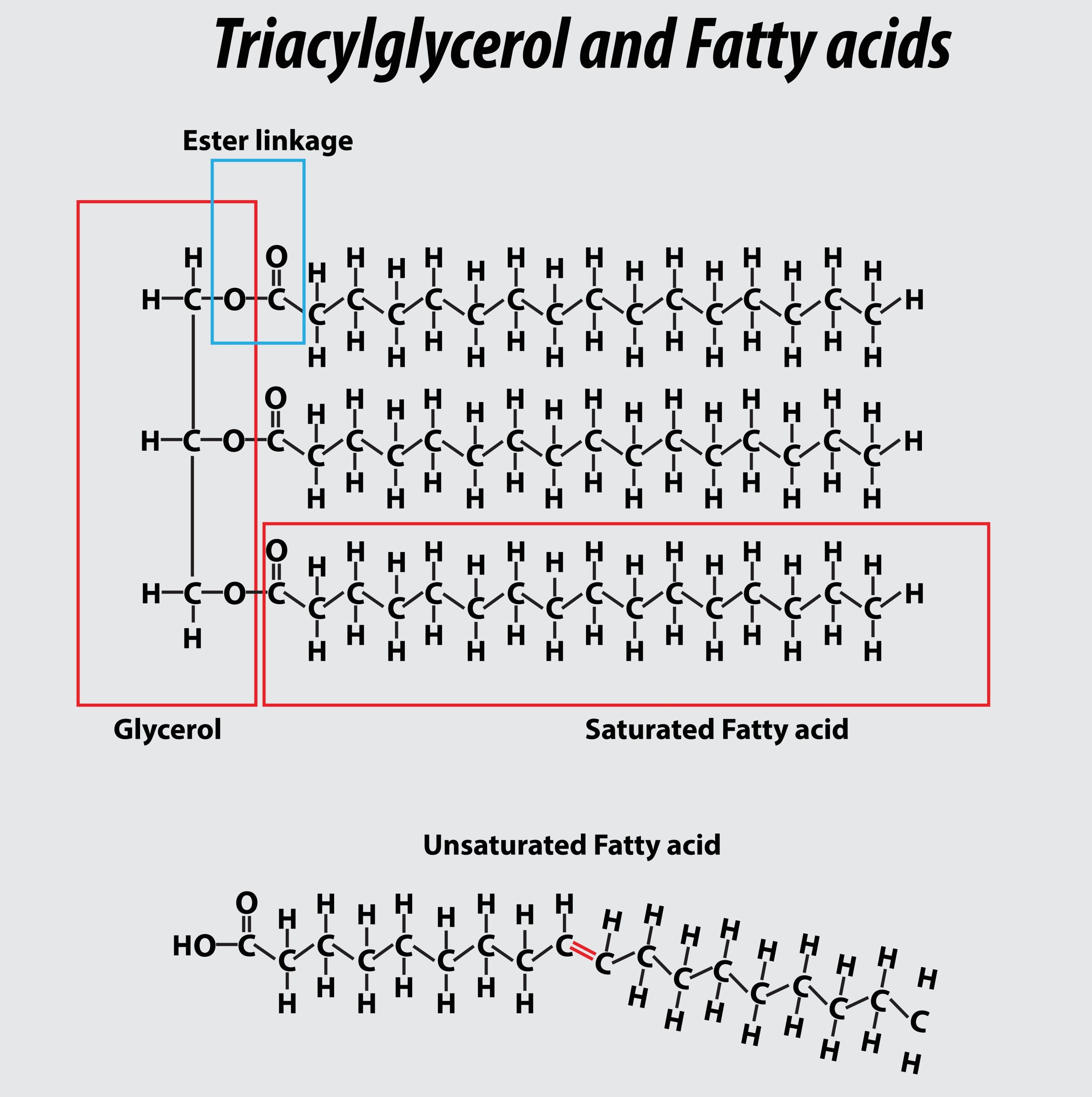
Fats and Fatty Acids
Fats and oils (above-right) are comprised of three hydrocarbon chains attached to a back-bone of glycerol. Because our blood is not fat-soluble, each fat molecule in the blood must be attached to a carrier molecule. The term triglycerides, means fat in the blood — part of our cholesterol number and something we need to keep low for health-sake.
Fats are acidic, meaning they have a proton to share. The lower-right image shows a single fatty acid with one point of un-saturation (one double bond). This is a mono-unsaturated fatty acid, which is a major fraction of (healthier) olive oil.
The fats and oils we use in cooking are always mixtures of saturated, monounsaturated, or poly-unsaturated types — never pure. All refined fats and oils provide about 120 calories per tablespoon — by volume, the most calories of any food.
The Basics on Calorie-Dense Hydrocarbons
Dietary fats are vastly more important than calories and energy. The body makes thousands of specialty molecules using fats, so we need to acquire (or produce) the needed balance of fats, but we cannot manufacture all we need.
For instance, brain matter is about 60-percent fat, one-quarter of which is omega-3 polyunsaturated fat (PUFA). Well, polyunsaturated fatty acids (omega-6 and omega-3) are only manufactured in the chlorophyll cells of plants — and acquired only from food. So, consuming foods with nature’s balance of fats is important to health.
Fats and Oils — All Mixtures
We commonly refer to animal fat as “saturated.” That’s not quite right. For example, the fat on a beef-steak is only about half-saturated and the rest is mono and poly-unsaturated. Why is that important?
It matters because all three types are critical to good health and, say, butter is not as “saturated” as you might think (see below). Again, balanced and proportional to the needs of the body is key. Given that most American adults are now impacted by a long-term health challenge, our era is a radical swerve — a skewed imbalance in many areas of health. Our chronic disease frequency is the cost of this imbalance.
And it turns out, a major component of that “swerve” is the Standard American Diet (SAD): highly refined, high-calorie, high-hormone and insulin, added emulsifies, all rapidly absorbed. Discussed at length on this page is the excess and imbalance of omega-6 polyunsaturated fats (PUFAs). Conversely, the long-chain omega-3 fats crucial to brain cognition, vision, and cell membrane function have been intentionally removed from our SAD food supply. Indeed, shelf-stable omega-6 is a colossal part of the SAD problem (discussed further below).
Extra-virgin olive oil as we might use in a salad dressing is a healthy oil and is highly monounsaturated (good). But olive oil will also contain around 14-percent saturated fat. Wild-foraging game meat, such as moose, deer, ducks, or a Cape buffalo have been shown to contain much higher levels of polyunsaturated fat than industrially-produced beef, pork, or chicken.
The omega-3 fat found in cold-water marine fish, like salmon, cod, or halibut, is anti-inflammatory, relatively health, and very scarce in diets that favor highly-processed foods. And yet, about 20-percent of the fat dripping from a freshly cooked wild Alaska Sockeye salmon is saturated fat — the chemical equal to the saturated fat in a pork-chop.
Fat Calories and Free Radicals
The more calories you consume, generally the more you release free-radicals inside your cells during the metabolic process. It’s a normal process that our cells control beautifully, provided it’s not excessive. Free radicals are simply the trash left-overs from burning calories, but certain foods produce more.
Oxidative stress is when the body has an excess of free radicals and it’s a routine part of chronic disease. Oxidative stress is described more fully on the page Insulin and Metabolic Disease.
Because polyunsaturated fats have many (poly) double bonds, they can form more free-radicals and generate more oxidation inside the body, when metabolized. This is a primary reason for minimizing the intake of the polyunsaturated seed oils. Exposure to light and excessive heat make it worse.
Neal Young got it right when he sang: “Rust Never Sleeps.” Rusting iron and free radical action inside the body are both examples of oxidation — a universal phenomena. AT RIGHT: The image shows how the free radical’s opposite dance partner is an antioxidant. A free radical grabbing onto an electron happens trillions upon trillions of times — every second — throughout the body.
Excessive free radicals (oxidative stress) can be viewed as the proverbial bull in a China shop — with your cells and blood vessels serving as the “China Shop.” Case in point: The most widely accepted theories on the initiation-phase of cancer give free radicals center-stage.
By lowering oxidative stress, your body is better able to prevent or fight ALL diseases. Some ways include:
- Lowering daily stressors
- Sleeping 7 to 9 hours nightly
- Avoiding late eating — “fast” for about 12-hours in 24
- Consuming sufficient calories (not excessive)
- Favoring colorful (antioxidant-rich) plant foods
- Favoring healthy fats and oils when used
- Practicing regular exercise
- Cultivating joyful social connections

At 9-calories per gram (120 calories-per tablespoon) fats and oils pack about twice the calories, when compared to an equivalent weight of the other two macronutrients: carbohydrate (starch/sugar) and protein. Given the calorically excessive SAD landscape, we have to be careful when adding fat to food.
A Few Tips for Cooking with Oil
Foods fried in polyunsaturated seed oils (corn, safflower, canola, etc.) will tend to contain much higher levels of free radicals.
Smoking oil generally means danger. By heating polyunsaturated cooking oil above the smoke-point, we can generate trans-fats right there in the pan — the excess heat reshaping the molecules.
The best high-temperature cooking oil is saturated (coconut oil or animal fat). It will take high heat very well and can’t become a trans-fat.
Some vitamins require fats for solubility and proper absorption (A, D, E, K) and monounsaturated fats (olive or avocado oil) are our healthiest refined culinary oils. One assumption, therefore, is that eating lots of refined olive or avocado oil will make the you healthier. Be careful with that assumption, because it would also depend on your own metabolic health and waistline.
Refined cooking oils are the highest form of concentrated calories, are a very recent addition to the human food portfolio, but do not spike blood sugar or require insulin the way that sugar, refined flour, pop, Red Bull and nachos do. The high-fat “ketogenic” diet-style is based on ample fat intake and certainly lowers both insulin and blood sugar, which may be exactly what you need. However, low-fat eating is associated with some very long-lived cultures. We can also reverse some chronic diseases — scientifically proven, impressive track records — with very low-fat dietary treatment programs.
See “Disease Reversal,” farther down this page to learn a few particulars on medical doctors who use a low-fat (and vegan) strategy to reverse chronic diseases like diabetes, heart disease, obesity, and auto-immune problems.
Omega-6 and Omega-3 Essentials
The two families of essential poly-unsaturated fatty acids (PUFAs) are omega-3 and omega-6. The image at right shows awesome range of foods that are high in omega-3 PUFAs.
Omega-3 fats tend to go rancid more quickly and food processors learned that a long time ago. To improve shelf-stability, they systematically remove the omega-3 PUFAs from our myriad of processed foods, snack foods, etc. Thus, processed foods, deli-delights, “vegetable” oil, and the grain-fed NY steak — do not contain the natural balance of these very critical nutrients and the body and brains of modern SAD eaters are significantly deficient in long-chair omega-3 PUFAs.
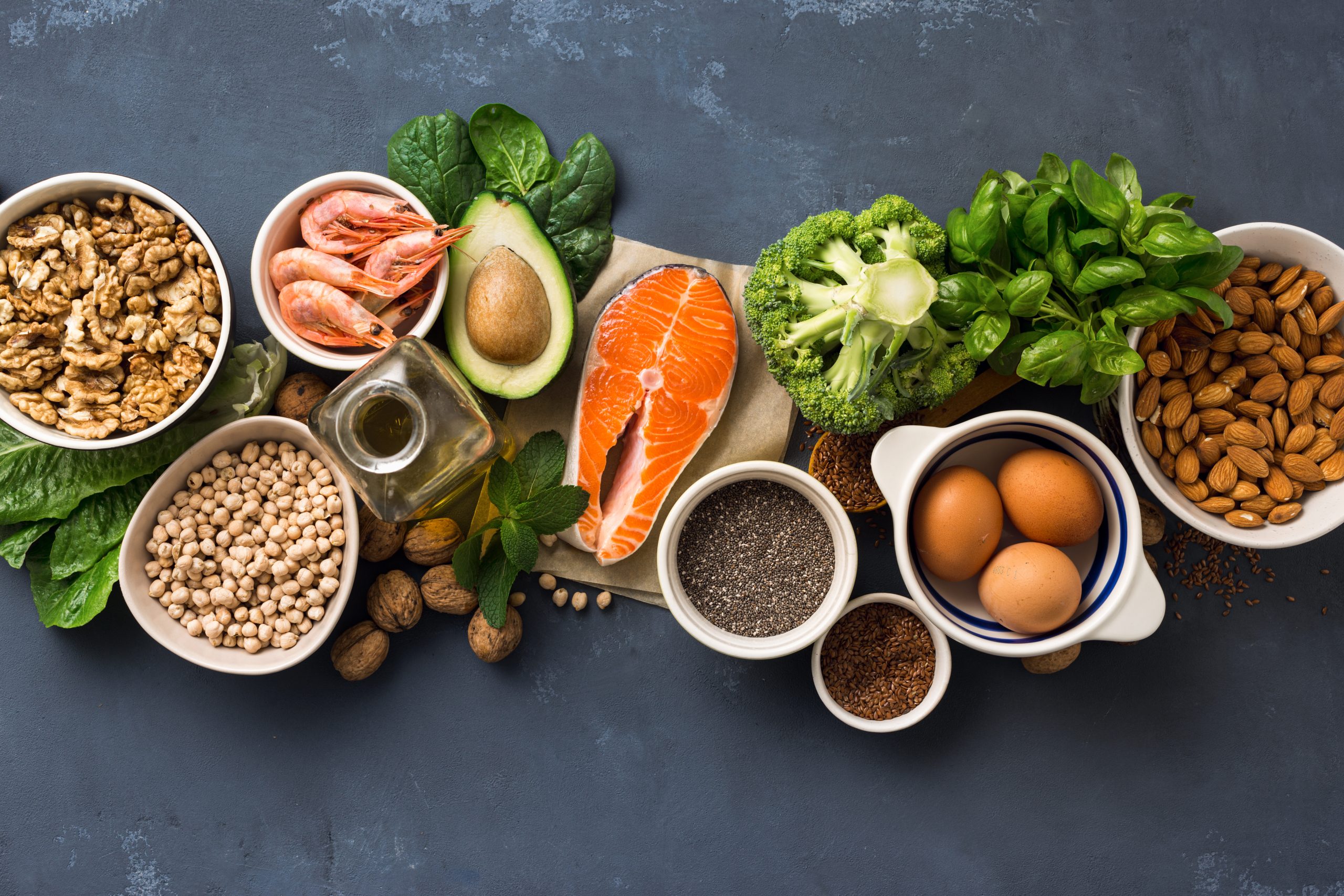
This deficiency, further discussed below, impacts health in some surprising ways. As noted previously, our brain is about 60-percent fat, one-quarter of which is omega-3 PUFA. The deficiency caused by a highly processed diet — that specifically lacks the omega-3 PUFA, has a direct impact on cognitive development. That’s something our schools and indeed our entire nation should be deeply concerned about
“Essential” — nutrient only acquired in food, which includes both PUFA families. The body does not manufacture them.
“Unsaturated” — their carbon chains are not saturated with hydrogen. Each place where a hydrogen atom is missing there is a double chemical bond—and a kink in the carbon chain.
“Poly” — multiple double bonds creating multiple kinks in the carbon chains that comprise the fat molecule. PUFAs are liquid at room temperature because multiple kinks prevent PUFA molecules from snuggling too tightly.
- Omega-6 fats have their last double bond on the sixth carbon from the end of the chain.
- Omega-3 fats have their last double bond three carbons from the end.
Omega-9/Monounsaturated fats have only one double bond—one point of un-saturation located on the ninth-carbon from the end of each chain. They are “omega-9.” Olive oil and avocado oil are predominantly monounsaturated, omega-9 forms.
Math Convention for Omega-6, Omega-3 Ratios
Always place the omega-6 value before the omega-3 (O6:O3) and the math will work correctly. The ratio can also be viewed as a decimal or fraction: O6/O3.
Cooking Oil Chemistry
TABLE RIGHT — shows a breakdown of some common culinary fats and oils. All are mixtures!
- The green highlight shows the healthiest fats and oils. These have higher levels of monounsaturated fats, relatively low O6:O3 ratios (anti-inflammatory), and are low in saturated fat.
- Highlighted blue are animal fats: high in saturated fats; have healthy (low) O6:O3 ratios, and mid-range monounsaturated fats.
- Highlighted grey are tropical oils, highly saturated, and best used sparingly (but best for high-temp cooking).
- Highlighted pink at the bottom are oils with high, unhealthy O6:O3 ratios, routinely used in processed food.


Less Fat, More Health
Global health authorities recommend choosing polyunsaturated oils over saturated-mostly animal fat. Then they say, remember to avoid products high in omega-6 PUFAs, or to favor omega-3 PUFAs. Well, friend, that’s pretty impossible if you are regular at the deli-case, hot-case, or cookie tin.
Shown in the multi-colored table (above), darn few plant-based cooking oils have: a) healthy omega-6:omega-3 ratios, or b) high levels of (healthy) monounsaturated fats. They are olive, avocado, and canola. Canola oil (rape seed) is an odd duck. Absolutely a highly processed, industrial seed oil—but with a healthy O6:O3 ratio. Less fat is more health.
You want your body to fight disease, not promote disease, right? That’s why it’s important to return to the theme dealing with Earth’s most caloric food. More calories will not make you or America healthier, The advice to choose plant-based polyunsaturated cooking oil ignores several glaring facts about the U.S. today: nearly 60% of the SAD calories already come from highly processed foods, which include highly processed, free-radical-making high-omega-6 seed-oils.
Translation: lots of people with terrible diets, uncontrolled blood-sugar and excessive fat in the blood (triglycerides) that wind up jamming-up insulin receptors (insulin resistance).
Will selecting, say, olive oil help with your health? It’s better, yes, but here’s the caveat, once more. High calorie-living is “ground zero” for our unsustainable metabolic disease problem. THE SHEER VOLUME, CALORIC BURDEN, AND FREE-RADICAL PRODUCTION of ADDED OIL IS MAKING DISEASE.
Grocery stores with dozens of different oil products? An equal number of sweetened beverages with the no-fiber fruit juice on a different aisle? These business enterprises are not health-focused. To my point emphasized in cheeky all-caps above, the U.S. needs to lower daily fat intake and daily fat purchase-frequency. The important health-focused question dealing with fats and oils is, “How can I and my loved ones avoid a few tablespoons of oil today and tomorrow.”
Here is how!:
- Use less by switching to water-based cooking — steaming food instead of frying in oil — vastly healthier (see why under Insulin and Metabolic Disease)
- Replace the cookie tin with a bowl of fruits and vegetables — where they can be seen and eaten readily
- Reconnect your time and attention to meal prep and Real Food–rather than a dependence on ultra-processed heat-and-eat junk
- Find sauce recipes without added oil or sugar — not the expensive, gooey, fatty crap sold for “dressing”
- Take the snazzy deep-fry kitchen appliance to the landfill.
The dopamine neurotransmitter and our energy balance hormones have Americans in an addicted to highly caloric food on every corner: the deli muffin that leaves a grease stain on the napkin, or the 300-calorie barista beverage, the ready-to-eat on the go treats. All are like an old reliable dog or kitty cat. There to stroke and comfort and give meaning to our lives, while destroying our long-term health.
Extra fat added to food is savory and has a tremendous ability to motivate eating behavior, but modern America is already swimming in the extra calories. Our primal hormonal drive, combined with reward-seeking linked to chronic stress and insulin resistance motivates high-calorie emotional eating. It surrounds you every day, but is not physiological hunger! Enter the worlds’ most calorie edible — refined oil or fat.
Just about devoid of vitamins and minerals and possibly PRO-free-radical, we must be careful. The monounsaturated forms of refined oils have been shown to be healthier, but generally speaking, improving personal and U.S. health means consuming lower levels of fat.
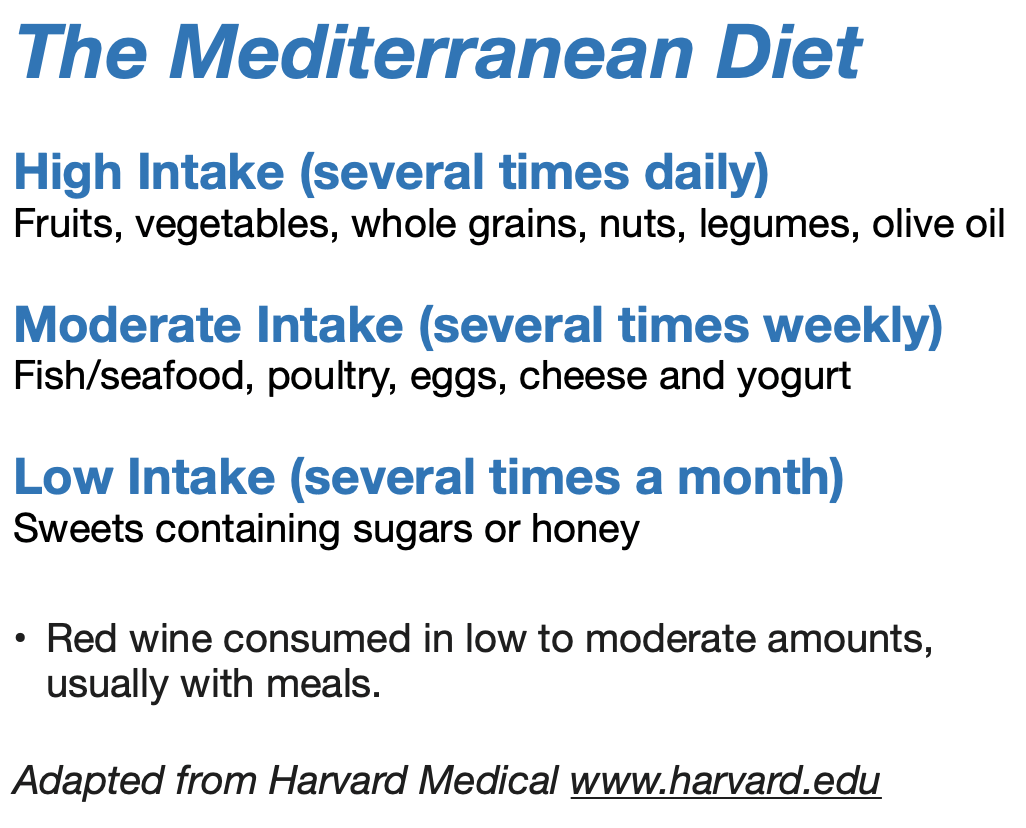
Fat Recommendations and the Mediterranean Diet
“Western” science first described the Mediterranean eating pattern in the years after the Second World War while studying the hearty folks living “close to the land” in this region. By modern comparisons, these people lived with considerable post-war poverty — like herding subsistence livestock, growing big gardens, and transportation by foot or bicycle. Quite different from Americans today!
As summarized on the left, the Mediterranean Diet offers great flavor, diversity, and is viewed as protective, with plenty of veggies, nuts, greens, seeds, whole-grains, olive oil, eggs, diary, and healthy meats (poultry and fish), but restricts red and processed meats.
The “Mediterranean” approach is high in fiber and high in disease-fighting antioxidants. And its fat is not all from added oil. Far from it. Natural fats come with nuts and seeds, dairy, eggs, and selective meat intake — a healthy combination of saturated, monounsaturated, polyunsaturated forms. Plus, the Mediterranean approach is fantastic for gut health, and all the disease-prevention that goes along with it. The well-cultured microbiome is what UCLA gut expert, Emeran Mayer, M.D. considers “the gold standard” for human health.
Near the top of the page Animal Products and Health, are two “healthy plate” graphics featuring: the Mediterranean “Healthy Eating Plate” from Harvard; and a high-performance “Vegan Plate” from Brenda Davis, RDN. The current U.S. recommendation is to keep fat under 30-percent of calories (dump the deep-fryer). For comparison, the Mediterranean approach will range as high as 40-percent of calories from healthy fat. Its restrictions — high-omega-6 oils, sugar, highly-refined carbohydrates and red meat — are crucial. A careful vegan/lacto-ovo-vegetarian diet might have fats ranging from 20 to 30-percent of calories.
Will a careful “Mediterranean” diet-style allow weight loss? When we dump the refined carbs, added sugar, and the excessive fat found in precessed foods AND increase dietary fiber, antioxidants and healthy protein — that’s a winner. As noted above, lowering our sources of modern stress are also crucial to weight-loss.
Will “Mediterranean” reverse diabetes or vascular disease? That depends of the individual and it is certainly an improvement. But “reversal” or complete remission are not likely solely through this diet. In essence, the vegan diet-style with no added fat — and strong clinical support — has been shown to be a disease reversal program. This is the wheelhouse of the American College of Lifestyle Medicine.
You can also read about these strategies through ground-breaking clinician-authors: Dean Ornish, M.D., Caldwell Esselstyn, M.D., Neal Barnard, M.D., and Joel Fuhrman, M.D. Several successful disease reversal diet plans are outlined below.
Feed-Lot vs. Green-Forage Fat
Up the page a bit was an overview of the primary cause of the O6:O3 imbalance: processed food, fast food, and cooking oil. The imbalance is also strengthened by eating animal products raised on grain (and on antibiotics).
Of course, whole grains are wonderful foods. An example is morning mush made from rolled or steel-cut oats. But our cereal grains are naturally higher in omega-6 PUFAs and about one-third of SAD calorie are from eating animal products — the vast majority fed on grain in confined animal feeding operations. We American’s, of course, eat lots of wheat. About 95-percent of all wheat consumed in the U.S. is highly-refined white flour.
Free-range meat is higher in omega-3 PUFAs and lower in saturated fat. Free-living Cape Buffalo were found to be six-fold higher in omega-3 PUFAs and had ten-times lower total fat than domestic beef.[i] A free-living Sitka blacktail deer spends its life munching on natural vegetation and even periodically grazes on seaweed. Such an animal will have low total fat, lower saturated fat, and a higher proportion of PUFAs, including much higher omega-3 PUFAs.
[i] The Queen of Fats—pg. 143

A Confined Animal Feeding Operation
About one-third of calories in the Standard American Diet come from animal products. Our industrial animal agriculture generally produces animal products excessive in omega-6 PUFAs. Our “confined animal” industries use vast levels of sub-therapeutic antibiotics. Vast cruelty also go hand-in-hand with this system.
Green-forage Means Healthier Meat
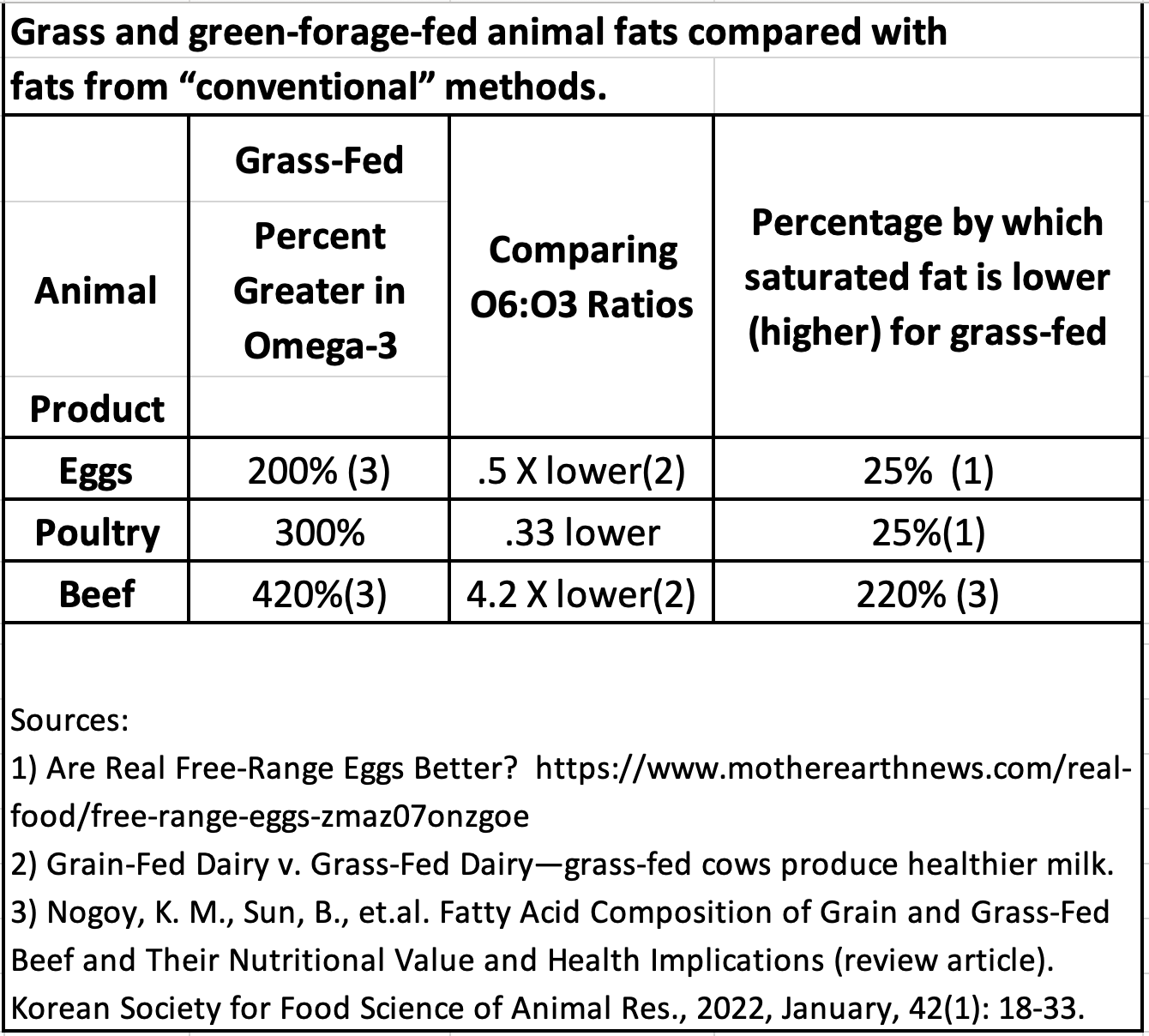
AT RIGHT — the table shows results from a 2022 study from Korea (item 3). Beef raised entirely on grass or green-forage had less than half the saturated fat and over four-times more omega-3 PUFAs, compared to grain-fed/finished animals. “Conventional” grain-fed animal flesh is significantly higher in the inflammatory forms of fat: saturated fat and omega-6. Whether you acquire high-omega-6 fat is consumed in fried/fats food, packaged snack-food, breakfast cereals, or consumed second-hand by eating animal-products raised/finished on grain, the result is imbalance for the consumer.

Big-Agriculture, Big Fat, Big Disease
Every health authority is now advising eating more omega-3 fat to counter the above noted imbalance. The nations primary sources of the excessive omega-6 PUFAs are: “fried foods, vegetable oils and processed foods.”[i] Secondarily, omega-6 are higher in “conventional” (grain-fed/finished) meat, poultry, eggs and dairy, reflecting major, long-standing priorities of the U.S.D.A. subsidies to U.S. agriculture.
When you choose grass or forage-fed animal products that are not raised in intense confinement, you also lessen the use of antibiotics in meat production. For example, beef “finished” on grass or alfalfa-hay are simply healthier when they go to slaughter. However, this is a small fraction of the U.S. beef market.
In 2020, “medically useful” antibiotics administered to livestock in sub-therapeutic doses was estimated at 73-percent of total global antibiotic use. Here, “sub-therapeutic” means keeping metabolically sick animals from dying, but not curing anything. Unquestionably, that practice diminishes the long-term efficacy of the anti-microbial drugs involved. In 2024, the combined global use of antibiotics for cows, hogs and chickens is estimated at over 76,000 tons.[i]
Why feed medically useful antibiotics to livestock? They have a metabolic and/or digestive disease from being forced to eat grain (not their natural food) in high-density enclosures. Of course, “confined feeding” produces meat and dairy at a lower cost, yet the cruelty at the base of modern industrial animal agriculture is truly staggering and so is the pollution.
Two-thirds of the crop calories produced on U.S. cropland are fed to animals, mostly in confinement operations. Just 27-percent of America’s current cropland goes to feed people directly. Of course, there is also the importation of animal products from places like Brazil, where vast areas of the Amazon rainforest have been converted to raising grain to feed animals in confined feeding operations.
The US Farm Bill subsidizes high levels of chemically intensive grain and soybean production for use as animal feed. U.S.D.A crop subsidies create incentives for unhealthy, high-omega-6 cooking oils, high-fructose corn sweeteners, and those sub-therapeutic antibiotic uses. America’s subsidy system, unquestionably, produces cheap calories — making white flour the “go-to” food for poor Americans and U.S.D.A. School Lunch, alike. Indeed, our subsidy system to American agri-business holds down meat, poultry and dairy prices — but at what impact to human health and the environment? It’s an incalculable “pay now or pay later” proposition.
[i] Global antimicrobial use in livestock farming: an estimate for cattle, chickens, and pigs. Zahra Ardakani, Maurizio Aragrande, Massimo Canali. Animal Vol(18), issue 2, Feb. 2024
[i] Heins, B., (2021), UMN Extension: Grain-Fed Dairy v. Grass-Fed Dairy—grass-fed cows produce healthier milk.
The Omega-6 Imbalance and Inflammation
Polyunsaturated fatty acids are used to construct many cellular messenger molecules. Eicosanoids, for instance — biologically messenger molecules that signal a change, such as vasoconstriction, blood pressure up or down, inflammation and blood-clotting—or the reverse—vasodilation, anti-aggregation, or anti-clotting.
The thromboxanes are eicosanoid messengers that trigger inflammation, aggregation and clotting, so the blood can stop blood flow after an injury. The reaction might be quick and strong or slower and more nudge — depending how the molecule is assembled.[I] Other complementary eicosanoids can counteract the pro-inflammatory, pro-clot message, in turn.
The structure of the polyunsaturated fatty acids used to assembly these messenger molecules—omega-6 or omega-3—directly influences the strength of these signaling molecules.
By controlling our intake of PUFAs we exert indirect control over our body’s signaling for inflammation or clotting:
- Higher levels of dietary omega-3 fats mean our cellular messenger molecules signal lower/slower more nudgy levels of clotting, aggregation and inflammation.
- Higher levels of dietary omega-6 fats mean our cellular messenger molecules signal higher/faster more explosive levels of clotting, aggregation, inflammation.[ii]
Common pain-meds—like aspirin, ibuprofen, acetaminophen, naproxen, and the COX-2 inhibitors, Bextra and Vioxx—mechanistically block a single enzyme that reduces eicosanoid production. That is how these medication reduce inflammation and with it pain. In other words, the dietary PUFA imbalance that elevates inflammation and pain has a direct role in our high use of pain-relief and anti-inflammatory drugs. To what extent we do not know.
This raises a profoundly important question about processed foods and pain. Shall we reduce pain and needless inflammation with a healthy diet, or through billions spent yearly on anti-inflammatory drugs? Omega-6 PUFAs are by no means the only pro-inflammatory agent in processed foods. Let’s see, there’s the sugar, refined starch, the lack of polyphenols (antioxidants) and insufficient fiber.
- The O6:O3 imbalance for a typical American family who routinely consumes the SAD is perhaps three to ten times that of our ancestors just a few generations ago.
- The myriad of chip products, crackers, savory dips, white bread, sweet-fat sauces, processed meats, snack food, beverages—tens-of-thousands of products. Omega-3 PUFAs we must have for optimal brain function, vision, calm cellular signals, health, and balance continue to be removed from the vast majority of highly processed foods.
[i] The Queen of Fats—pg. 35
[ii] The Queen of Fats—pgs. 96-102
Excessive Omega-6 PUFA’s and Pain
The Standard American Diet problem — foods with abnormally high omega-6 fats — yield more explosive inflammation and clot-forming signals. Shelf-stable omega-6 PUFAs favored by food processors elevates chronic metabolic inflammation and chronic illness including insulin resistance, and factors related to diabetes and vascular disease.
Omega-6 fat is also essential to our health and our body cannot make it. Just like the anti-inflammatory omega-3 fat, omega-6 fat are acquired from both plant and animal foods — just don’t go looking for it, because you’re probably getting too much already..
AT RIGHT — a quote from William Lands, Ph.D, retired professor of nutritional biochemistry and among the foremost authorities on the essential fats. He articulates the enormity of the omega-6:omega-3 imbalance problem.
Today, U.S. consumers spend billions suppressing inflammation. Is FDA or USDA trying to change the connections between disease and high-omega-6 in the diet? No. In fact, the US Farm Bill appropriation does the exact opposite by subsidizing grain, confined animal feeding, and high omega-6 seed-oil production.
High Omega-3 Indigenous People — 1970s
What happens to the body on a diet very high in omega-3 fat? The blood-chemistry of Greenland Inuit (Eskimo) people was evaluated by Danish scientists in the early 1970’s. This high-latitude, largely pre-agricultural culture was thriving and healthy, but change was coming. They subsisted mostly on traditional foods—fats and protein from North Atlantic fish and marine mammals, species very high in omega-3 fats. They had virtually zero heart disease, which is why the scientist wanted to understand their foods and their blood-chemistry.
Danish doctors Jorn Dyerberg and Hans Olaf Bangs made multiple trips to Greenland in the early 1970’s. They analyzed numerous blood-draws over the years and found something unexpected: slower clotting.

In the image above by Theresa Quaqjuaq (1973), titled “Outdoor Teatime,” we see a classic item of the “western” diet, Ritz Crackers.
Whether from a simple pin-prick or an injury, the Greenland Inuit people in the early 1970’s took roughly forty-percent longer to stop bleeding, when compared to a typical Dane. Serious injuries were known to cause “abnormal” and profuse bleeding. The scientists observed how nose-bleeds were common and unremarkable; however, these coastal fishing and marine mammal-hunting people were extremely active and expressed robust health.
The research confirmed that diets very high in omega-3 (low in omega-6) correlated to heart disease being extremely rare. Of course, the Inuit’s animal-based diet was sky-high in saturated fat from marine mammals and fish.

The Danish scientists, Dyerberg and Bangs, showed how a diet very high in omega-3 PUFAs greatly reduced the inflammatory signaling, clot-formation, and aggregation—factors that change the risk for cardiovascular disease dramatically.
Japan provides a different cultural clue. The traditional Japanese diet contains less saturated and omega-6 fats and more omega-3 (and lots of starch), and Japan has much lower rates of heart disease than do Americans.
The physiological basis for negligible heart disease among early Greenland Inuit (in the 1970s) seemed to have little to do with saturated fat. The difference apparently was by calmer, less explosive signaling by their cellular messengers (ecosanoids)
Cellular messengers assembled with the omega-3 PUFAs backbone signal less-inflammation, clotting and aggregation. When deficient in omega-3 fats—and most Americans are—you’ve got trouble. Natures O6:O3 ratio (ranging from 1:1 to 1:4) normalizes the body’s signaling for inflammation and clotting.
Three decades after his research on Greenland Inuit blood chemistry, the Danish scientist, Jorn Dyerberg, Ph.D explained to author, Susan Allport, how we can easily misunderstand “normal” as meaning what occurs in the dominant Western culture, which in the 1970’s “was assumed to be American.”
We must be very careful about the term ‘normal,’ because normal may be very far from optimal. Maybe the ‘normal’ bleeding time is closer to the Eskimo’s, and it is we who have abnormal, shortened bleeding times.
After all, what are we dying of? We’re not dying of bleeding, are we? We’re dying of clotting, which is a much more severe problem.[i]
Is there, perhaps, a paradox at work—an Omega-3 Paradox? When saturated fat and omega-3 fats are high (and fiber low)—such as among Alaska’s early salmon-dependent Tlingit/Haida, or marine mammal-hunting Inuit/Eskimo peoples—is the inflammatory nature of very high saturated fat consumption being suppressed or overwhelmed by the preponderance of eicosanoids constructed with less-inflammatory omega-3 PUFAs?
[i] The Queen of Fats—pg.67
Read This Before Going “Keto” or “Adkins”
If you are a person who hopes to lose weight — or perhaps your doctor says you need to “get your A1c number down” — you can absolutely lower insulin and blood-sugar by eating more fat and protein through a diet higher in meat, nuts, and seeds. Of course, we all know the importance of avoiding sugary, refined, or high-glycemic (starchy) foods.
A “ketogenic diet” means a diet that promotes fat burning. The body cannot enter a state of “ketosis” (fat burning) if the insulin hormone is elevated, so big sources of starch are NOT on a “keto” menu: potatoes, rice, bread, refined wheat; a keto diet might even limit beans and lentils (legumes) — very healthy foods.
The ketogenic approach to weight loss was popularized by Robert Adkins, M.D. in the 1960s and 1970s. Adkins was a medical doctor who made a lot of money, got very famous, ignored his health, and died of heart disease at age 72. It’s still widely used, widely supported, and indeed bares some similarity to the American Diabetes Association “Diabetes Diet.”
Please remember the low calorie disease-fighters: the high-fiber, high-nutrient vegetables, all green veggies, alliums (onion family), mushrooms, and brightly colored vegetables. These are watery, carbohydrate-based foods that SHOULD NOT be removed from the diet!
On a keto weight control program fruit may be kept low because of its natural sugar. Yet, high-nutrient, high-fiber, gut-healthy, low calorie vegetables will always help to maintain the stable blood-sugar and low insulin that weight loss requires. The above-noted, watery veggies are not “high-carb” foods, The listed groups help to lower insulin, improve blood sugar and A1c, and lessen insulin resistance.
No question, “Keto” can induce weight loss. People who struggle to lose weight, including David A Kessler, M.D., former FDA director and author of Diet, Drugs, and Dopamine (2025), explain — they fail repeatedly. Why? Addiction and —
weight loss strategies where there is not a permanent lifestyle modification have very poor track records.
Here is the major concern I have about going keto. Getting a major share of calories from fats, oils or animal-products is sub-optimal for antioxidant protection and disease-fighting. With or without the calories from fats, or starchy plant foods, variety is super-important to diversifying the microbiome, empowering the gut-lining, ending bowel stagnation, and controlling the oxidative stress (excessive free radicals) that is a foundational factor in all disease.
The Mediterranean Diet and its derivatives contain plenty of healthy fat (30 – 40 percent of calories). It is a proven longevity diet, as are careful vegetarian/vegan options (not vegan junk-food).
“Mediterranean” can be a fantastic template for weight loss and can be adapted on a permanent basis. Elevate the filling colorful veggies, and fiber — but restrict the starchy, limit the dairy fat, and dial-back on the olive oil. At the top of the page Animal Products and Health, are excellent graphics of two high-performing diet-styles, including Harvard Public Health’s “Healthy Plate” (Mediterranean) approach to nutrition.
Disease Reversal: Very Low-Fat Diet
Every day in the U.S., lifestyle medicine healers, many of them members of the American College of Lifestyle Medicine, help patients reverse chronic disease. They use methods as old as dirt, like food-as-medicine. They offer practices to help lower stress, improve sleep-hygiene, and get sufficient exercise. It’s not a mystery. Those healers will certainly be using some modern technology, but the methods are mostly ancient. I find that gratifying.
Metabolic inflammation, oxidative stress, excessive glycation, jammed-up insulin receptors and so forth — are the body’s normal response to excessive calories consumed with insufficient fiber and antioxidants. The brain’s eating hormones have also been hijacked (see Insulin and Metabolic Disease).
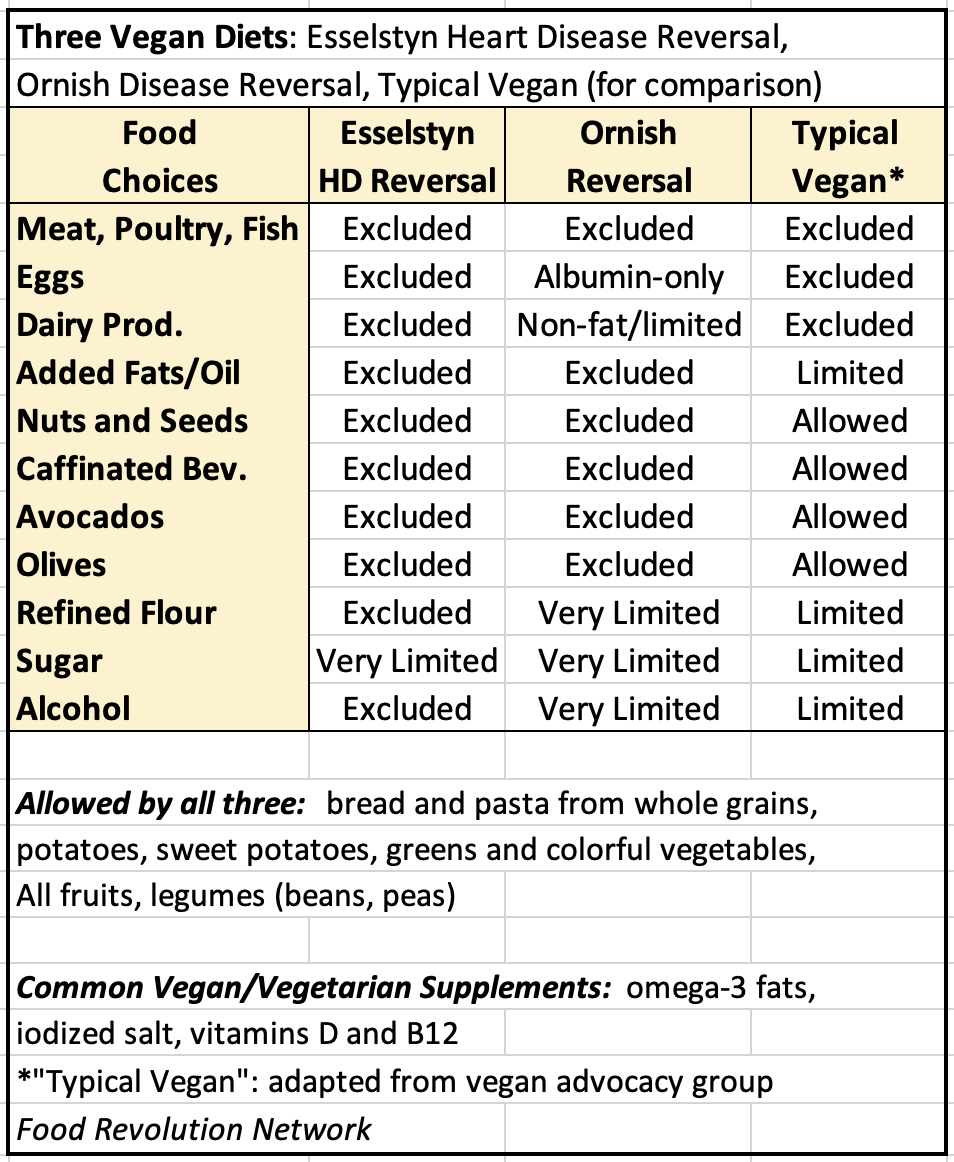
ABOVE RIGHT — The table is an approximation of two very low-fat diet programs developed by disease-reversal pioneers, doctors Caldwell Esselstyn, and Dean Ornish. For a comparison, a typical vegan diet-style, as advocated by Food Revolution Network is also shown.
I must be careful to neither diminish nor exaggerate the various chronic diseases that can be reversed through the methods used by lifestyle medicine. I am not a doctor, but I certainly advocate for this approach to treating chronic disease, where possible.
A core method to reverse a range of metabolic problems — including obesity, diabetes, vascular disease, and auto-immune disorders — involves a “treatment” diet that is very-low-fat and vegan (no animal products). It’s not a fad (but it’s not my personal diet). Medical doctors who have published extensively on this approach to reversing chronic disease include: Dean Ornish, M.D., Caldwell Esselstyn, M.D. Joel Fuhrman, M.D. and Neal Barnard, M.D.
Very Low-Fat Treatment Diets–Early Trials
Around 1980, a big question about cholesterol, diet, and vascular disease went something like this:
Using a cholesterol-lowering diet, can we prevent stroke and heart disease and reverse the blockage in coronary arteries, while at the same time prevent strokes (vascular injury to the brain) and reduce cognitive decline?
Whether it’s in your heart, brain, or feet, vascular disease is, well, vascular disease. In Prevent and Reverse Heart Disease (2004), Dr. Caldwell Esselstyn, Jr. estimates that “half of all senile mental impairment” is linked to vascular injury in the brain, caused by diseased arteries. He’s someone who should know. Folks with angina or heart disease need to buy this book RIGHT NOW.
Esselstyn began general surgery around 1970 at Cleveland Clinic, after serving as a U.S. Army surgeon in the Vietnam War. Not long into his general surgery practice, he recognized that prevention — not surgery — was the correct approach for many diseases, like breast cancer and heart disease. And he learned that total cholesterol of 200mg/dL was not protective — not protecting the vascular system from the atherosclerotic plaque formations he was seeing first hand, even in children age-4. Another early researcher/physician pondering similar questions independently was Dean Ornish, M.D.
I am limiting my comments to Esselstyn and Ornish, but they were not the first healers to make the diet-related observations about heart disease, nor a commitment to lifestyle medicine.[1] These two had the connections, brilliance, and guts to create two small, independent case-studies.
These medical pioneers have continued to push against mainstream American medicine! They both discovered that a strict low-fat diet (roughly 10 – 20-percent of calories from fat) does reverse atherosclerosis and the “lesions” that hemorrhage, break off, and clog coronary blood flow, or cause stroke, vascular dementia, peripheral arterial disease, and so forth.
[1] Nathan Pritikin (1915 – 1985)

- Please watch the film Forks Over Knives, about Esselstyn and his disease reversal patients. You’ll also be introduced to The China Study, nutritional biochemist T. Colin Campbell, Ph.D, and “the grand-prix of epidemiology.”
When “western” scientists (finally) looked carefully at Asian cultures they found very low levels of heart disease, cancer, diabetes, and other conditions that were epidemics in the U.S. and Europe.
Scientists also found very low intake of fat and animal products, along with much higher intake of vegetables and fiber.
Heart Disease Reversal: Mark and Mardell’s Story
Mark worked hard for 25 years aboard Alaska’s ferry system and retired as an Unlimited Able Seaman. Alaska ferries serve many remote coastal towns over a vast area, often traveling night and day. During his career, Mark managed to avoid the Standard American Diet — the meals prepared by the vessel food-service staff — but he couldn’t avoid the stressful work environment. Eyes smiling and with his big voice he recalled, “I never ate the French fries or a hamburger. Not once! Never had coffee on a wheel watch.”
The onset of the left arm-shoulder pain, which he described as ranging from “mild to stabbing,” began at age 56. Physical exertion was the trigger, activities like splitting firewood or cross-country skiing. The physical therapist told him, “You need to see a cardiologist,” and he did.

By the time Mark reached his early sixties, the standard American system of cardiology had installed two stents to “treat” Mark’s heart disease. Six years after its onset, this height-weight proportional man of considerable energy, an active hunter and fisher and a volunteer in the local Big Brothers Big Sisters program, was still suffering from “unstable angina.”
In 2010, Mark and Mardell realized the “stents were not working.” They had read about lifestyle medicine and soon traveled to Santa Rosa, CA, to True North. There they met Michael Klaper, M.D., a specialist in treating disease with a whole food plant-based diet. At the time, Mark was taking a statin (Simvastatin) and a blood thinner (Plavix). Soon, the most ancient of treatments—whole plant food—would be his medicine.
He described the initial experience as one of “boot camp.” “No oil, no sugar, no animal products. I asked, can I have a pizza. Silently shaking his head with a smile, “They laughed and said, ‘You’re not getting pizza here!’”
True North introduced Mark and Mardell to Caldwell Esselstyn, Jr., the food-as-medicine pioneer and author of Prevent and Reverse Heart Disease (2004). Over the coming years, Esselstyn supported Mark’s treatment with occasional consultations by phone. What’s good for the goose is good for the gander, so Mark and Mardell made the switch to a vegan diet and lifestyle together.
For the next thirteen years, they consumed no refined oil, sugar, or animal-products. All the fat in their diet was entirely natural, coming from whole plants. This dietary “treatment” is best viewed within the context of life or death, with no quarter for backsliding. Indeed, several of Esselstyn’s early patients who wouldn’t stick with the plan were kicked out of the trial, and they died a few years later. The phone conversations with Esselstyn gave Mark a distinct impression about this lifestyle medicine pioneer, “He’s a hard ass about staying with the treatment.”
True North and Dr. Klaper remained Mark’s primary, lifestyle treatment provider. “That’s the place! I can’t say enough about True North and the whole foods plant-based system.”
In 2024, fifteen years after beginning food-as-medicine, his new Cardiologist reported: “I am 99-percent convinced that your arteries are clear of blockages.” Mark say he resisted the invasive angiogram procedure that would definitively show the “all clear.” He’s back enjoying life, an active 76-year-old who loves XC skiing, keeping up on the firewood supply, and many other chores.
Mark and Mardell believe the triggers for his heart problems were related to a diet high in cholesterol and saturated fat. Complications may also relate to sleep apnea and the unstable sleep-work environment—25 years aboard the Alaska Marine Highway. Mark now sleeps with a C.P.A.P.-unit to provide stable oxygen flow. Daily breath-work and meditation with a vocal “omm,” a humming sound—both ancient methods—help Mark lower stress.
Mark and Mardell have again begun consuming wild salmon occasionally, but no longer other meat, nor the wild game Mark loved to hunt. They might enjoy a sweet treat at a potluck or birthday, but not very low sugar overall.
Standing as a testament to “modern” cardiology, the arteries that feed oxygenated blood to Mark’s heart still contain the useless metallic stents installed years ago. Their story of heart disease reversal is a love story and a classic Hero’s Tale involving deeply personal change in lifestyle, nutrition, and stress-reduction.
Summarizing Benefits of Balancing Omega-3 and Lower Total Fat Intake
Jumping back to the sentinel importance of omega-3 fats and wrapping it up, again I must reference the wonderful scholarship of Susan Allport, author of Queen of Fats (2008). With some of my own editing, below are listed broad benefits of increased omega-3 PUFA consumption, emphasizing healthier monounsaturated fats over “vegetable-oil”—but also to generally limit overall fat calories.[1]
- Reduces calories, oxidative stress, inflammation, and supports a lean lifestyle
- Supports body and brain functions that operate best with omega-6:omega-3 ratios in the range of 1:1 to 4:1
- Stabilizes the heart cells, decreasing the tendency of arrhythmia (irregular heart-beat), a common cause of death.
- Reduces needless inflammatory and clot-forming signals.
- Reduces the need for pain and inflammation reducing drugs: ibuprofen, naproxen sodium, and acetaminophen, etc.
- Reduces hypertension and serum cholesterol risk-factors
- Reduces risk-factors linked to atherosclerosis (vascular disease)
[1] List adapted from The Queen of Fats (2006), by Susan Allport
Bibliography
Cooking Oil Comparisons –Center for Integrative Wellness, July, 2021. www.drfabio.com/healthblog/cooking-oil-comparisons
Fatty Acid Composition of Grain and Grass-Fed Beef and Their Nutritional Value and Health Implications (review article). Nogoy, K. M., Sun, B., et.al. Korean Society for Food Science of Animal Resources, 2022, January, 42(1): 18-33.
Global trends in antimicrobial use in livestock farming. Zahra Ardakani, Maurizio Aragrande, Massimo Canali. Animal Vol(18), issue 2, Feb. 2024
Global trends in antimicrobial use in food animals: 2017 – 2030. Katie Tiseo, Laura Huber, Marius Gilbert, Timothy P. Robinson, T. P. Vsan Boeckel. Antibiotics (Basel). 2020 Dec 17;9(12):918
Good Calories, Bad Calories—Fats, Carbs, and the Controversial Science of Diet and Healthy (2008). Taubes, Gary,Anchor Books (Random House).
Grain-Fed Dairy v. Grass-Fed Dairy—grass-fed cows produce healthier milk. Heins, Brad. U. of Minn. Ext. Svs. 2021. (https://extension.umn.edu/pasture-based-dairy/grass-fed-cows-produce-healthier-milk)
Health Implications of High Dietary Omega-6 Polyunsaturated Fatty Acids. Journal of Nutrition and Metabolism (review article). Patterson, E., Wall, R., et.al, 2012.
Interconnected Plates—a Mediterranean-Inspired Gut Healthy Cookbook (2023).Mayer, Emeran, M.D. Harper Collins.
Omega-3:Omega-6 Balance. Global Health Watch (https://www.gbhealthwatch.com/Science-Omega3-Omega6.php)
Prevent and Reverse Heart Disease (2006), Caldwell Esselstyn, Jr. M.D.
The Queen of Fats: Why Omega-3s Were Removed from the Western Diet and What We Can Do to Replace Them (2008). Susan Allport, University of California Press
The Importance of Maintaining a Low Omega-6/Omega-3 Ratio for Reducing the risk of Autoimmune Diseases, Asthma, and Allergies. DiNicolantonio, J., Pharm.D., O’Keefe, J. M.D. The Journal of the Missouri State Medical Association. 2021, Sept-Oct, 118(5): 453-459. (https://www.ncbi.nlm.nih.gov/pmc/articles/PMC8504498/)
Omega-3:Omega-6 Balance. Global Health Watch (https://www.gbhealthwatch.com/Science-Omega3-Omega6.php)
Vitamins A, E, and Fatty Acid Composition of the Eggs of Caged Hens and Pastured Hens. Karsten, H.D., Patterson, P.H., Stout, R., and Crews, G. 2010. Renewable Agriculture and Food Systems: 25(1); 45-54.